Culture
Galungan and Kuningan: experiencing the great Balinese festival as a traveler
Every 210 days, Bali celebrates the victory of dharma and welcomes its ancestors. For about ten days, the streets fill with penjor and families return to their village. What you need to know to enjoy it without getting in the way.
- Updated on
- 7 min read
- By Kylian Dev
Contents
Key points
- Galungan comes round every 210 days according to the Balinese calendar, i.e. about every six months; Kuningan follows ten days later.
- The dates are announced by the official Balinese calendar: check them before booking, they change month from one year to the next.
- Banks, government offices and schools close or slow down; hotels and most restaurants in tourist areas stay open.
- Covering clothes, a sarong near temples, never walking through a procession: the festival belongs first to the families.
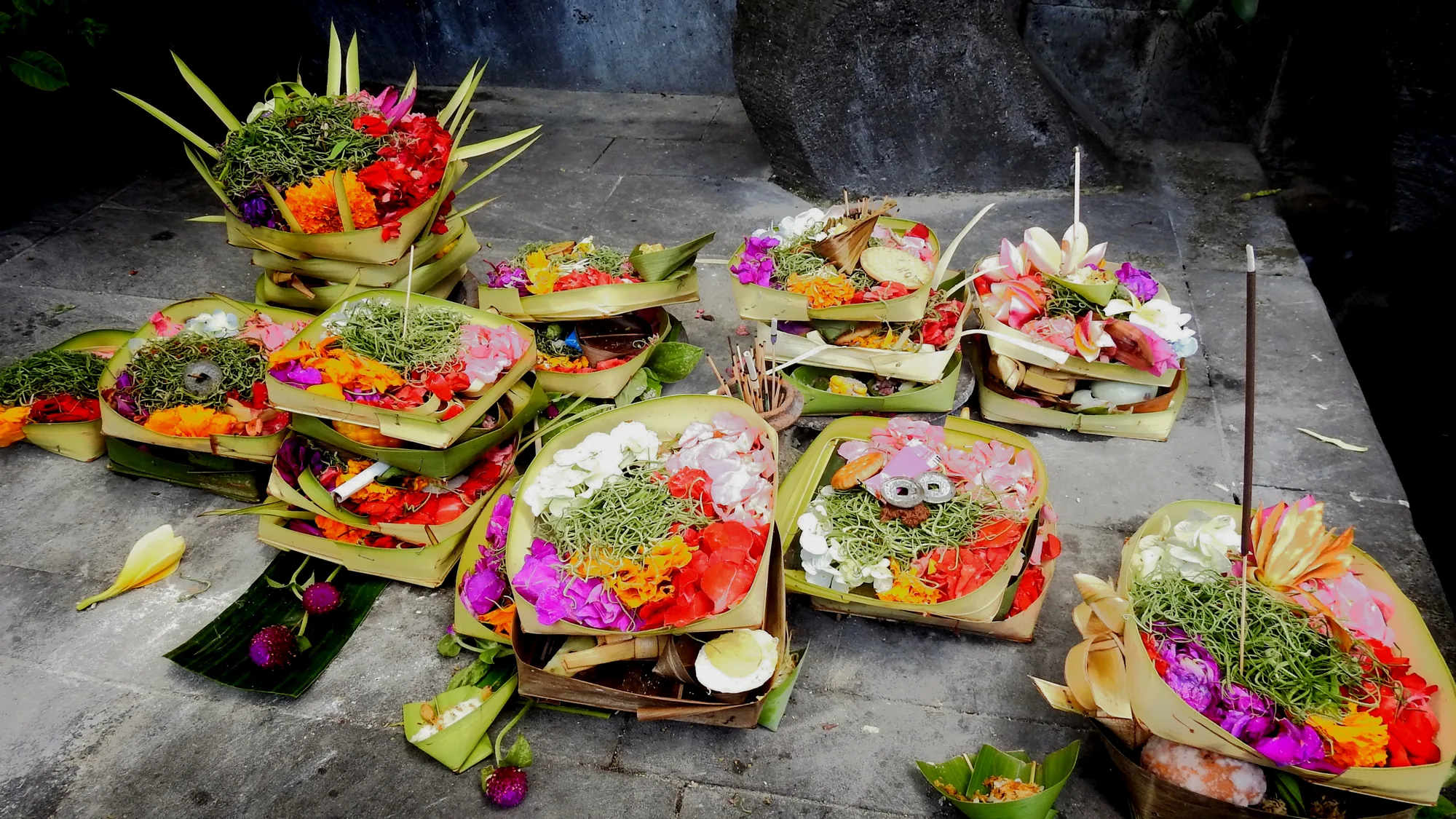
Galungan is the biggest festival of the Balinese year. It celebrates the victory of dharma, the just order, over adharma. The Balinese believe that the spirits of the ancestors then come back to visit their descendants, and leave again at Kuningan, ten days later. In between, the island lives to the rhythm of offerings, temples and reunions.
This guide complements Balinese temples and culture, which gives the basic rules at the temple. To place the festival in your stay, see the Bali festival calendar; for other rites, Bali ceremonies and cremations.
The pawukon, a 210-day calendar
Galungan does not follow our calendar but the pawukon, a Balinese cycle of 210 days made up of 30 weeks of 7 days. The festival always falls on a Wednesday, that of the Dungulan week; Kuningan falls on the Saturday of the following week, ten days later. It therefore comes round about every six months, in a different month each time.
Bali uses several calendars at once. The Gregorian calendar governs administration and flights. The saka calendar, lunar, sets Nyepi, the new year. The pawukon, a 210-day cycle, sets Galungan, Kuningan and most temple anniversaries, the odalan.
In practice: a Gregorian year often has two Galungan, sometimes only one depending on where the cycle falls. The dates are published every year in the printed Balinese calendar and taken up by the provincial administration. We do not publish a date until it is confirmed: ask your accommodation or check the official calendar when booking.
The days of Galungan, from the preparations to Kuningan
The festival spreads over about ten days. The day before, Penampahan, families cook and put up the penjor. On Galungan day, they pray at the family temple then at the village temple. The next day, Umanis Galungan, people visit relatives. Ten days later, Kuningan closes the period with offerings of yellow rice.
| Moment | What happens | What the traveler sees |
|---|---|---|
| Penampahan, the day before | Family cooking, penjor put up | Streets filling with penjor, smells of cooking |
| Galungan | Prayer at the family temple and the village temple | Families dressed in white or light colors, busy roads in the morning |
| Umanis Galungan, the day after | Family visits, outings | Roads and leisure spots busier |
| Kuningan, ten days later | Offerings of yellow rice, departure of the ancestors | Ceremonies in the morning, temples very busy |
During this period, groups of children or young people sometimes carry a barong from house to house, to the sound of a small orchestra: this is the ngelawang, a protection rite. You give them a coin or a note, with no obligation. The barong is explained in Balinese music and dance.
Kuningan is celebrated in the morning. The offerings carry woven ornaments shaped like a shield and a basket, the tamiang and the endongan, and rice colored with turmeric, which gives the festival its name: kuning means yellow.
The penjor, the bamboo poles arching over the streets
The penjor is a long curved bamboo pole, decorated with woven palm leaves, rice, fruit and fabric, planted in front of each house for Galungan. It evokes the sacred mountain and the prosperity granted by the gods. The penjor stay up for several weeks: they are the most visible sign of the festival.
Each family makes its own, often with the help of the neighbors. At its base, a small altar receives daily offerings. In the inland villages, such as around Ubud or Sidemen, streets lined with penjor form continuous arches.
- Do not touch a penjor or lean on it for a photo.
- Do not park a scooter against its base: the altar receives offerings.
- Photographing a street of penjor from the road is no problem, as long as you are not in anyone’s way.
What Galungan changes for a traveler
Galungan is a public holiday in Bali. Banks, government offices and schools close or reduce their hours, and many employees go back to their village. Roads are busy the day before and on the morning of the festival. Hotels, restaurants in tourist areas and private transport keep running, sometimes with fewer staff.
| Service | In general | Advice |
|---|---|---|
| Banks, official exchange offices | Closed or reduced hours | Withdraw cash before the festival |
| Government offices, immigration | Closed on public holidays | Plan visa procedures before or after |
| Hotels and guesthouses | Open | Fewer staff, slower service |
| Tourist restaurants | Mostly open | Family-run warung often close |
| Drivers and tours | Available, fewer of them | Book the day before, leave early |
| Tourist temples | Open, very busy with worshippers | Visit properly dressed, late morning or in the afternoon |
Getting around needs a margin: the day before, Balinese who work in the south return to their home village, and on the morning of Galungan, processions of worshippers go to the temple on foot or by scooter. Tips for getting around are in getting around Bali; for immigration procedures, see Bali visa and arrival.
Should you plan your trip around Galungan?
There is no need to move a trip for Galungan, but if your dates coincide, it is an opportunity: the island is decorated and religious life can be seen everywhere. Just plan for cash, short journeys on the day itself and a base in a village rather than in the urbanized south, where the festival is less noticeable.
Who it suits
- Travelers curious about Balinese life, staying in a family guesthouse.
- Families: children like the penjor and the ngelawang barong.
Who it does not suit
- Those who have paperwork to do on the day itself.
- Tight itineraries with a long journey planned the day before or on the morning of the festival.
To choose the season, start from the guide when to go to Bali, then check the chosen month in the festival calendar. If Galungan falls during your stay, an evening of dance in Ubud and a visit to the craftspeople round off the period well: see Bali crafts and markets. The dishes prepared for the festival, babi guling, lawar and sate, are presented in Balinese food.
Frequently asked questions
When is Galungan in Bali?
According to the Balinese calendar, about every six months: the festival comes round every 210 days, on a Wednesday. The dates are announced every year by the official calendar; check them before booking.
What is the difference between Galungan and Kuningan?
Galungan marks the return of the ancestors’ spirits and the victory of dharma. Kuningan, ten days later, marks their departure and closes the period, with offerings of yellow rice.
Are banks closed during Galungan?
Generally yes, or with reduced hours, like government offices and schools. ATMs work; withdraw cash before the festival to be safe.
Can tourists take part in Galungan?
You can watch, properly dressed and at a distance. If your host invites you to the temple, follow them and observe without taking part in the ritual gestures.
What are penjor?
Long curved and decorated bamboo poles, planted in front of each house for Galungan. They evoke the sacred mountain and prosperity, and stay up for several weeks.
Sources
Figures and rules checked on October 17, 2026 against the sources below. Entry rules and fees change: always check them on the official websites before you leave.
V
How to behave during Galungan
During Galungan, the rule is discretion. Wear covering clothes and a sarong near temples, stand to the side when a procession passes, do not step on offerings, do not photograph worshippers in prayer without permission. If you are invited to the temple, follow your hosts and copy them without taking part in the ritual gestures.
These rules are the same as for any ceremony: they are detailed in Balinese temples and culture and, for processions and cremations, in Bali ceremonies and cremations.