Culture
Balinese temples and culture: understanding, behaving, watching
Bali’s temples are not monuments but active places of worship. Understanding what happens there changes the visit, and avoids the blunders that bother the Balinese.
- Updated on
- 7 min read
- By Kylian Dev
Contents
Key points
- Sarong and sash, shoulders covered: the dress code is required in all temples.
- Never step on a canang sari, the offering placed on the ground and on doorsteps.
- Do not stand in front of priests in prayer and do not photograph a ceremony without permission.
- Nyepi, Galungan and Kuningan set the rhythm of the year: find out the dates before your stay.
Bali is the only Hindu-majority province in Indonesia. Religion organizes the days, the villages and the landscape. Visitors come across it everywhere: in the offerings on the pavement, in the processions that block a road, in the rice fields themselves.
This guide gives the keys to understanding and the rules for behaving. To place the festivals in the year, see the Bali festival calendar and when to go to Bali; to choose the regions to visit, things to do in Bali.
Tri Hita Karana and subak: why the rice fields are listed
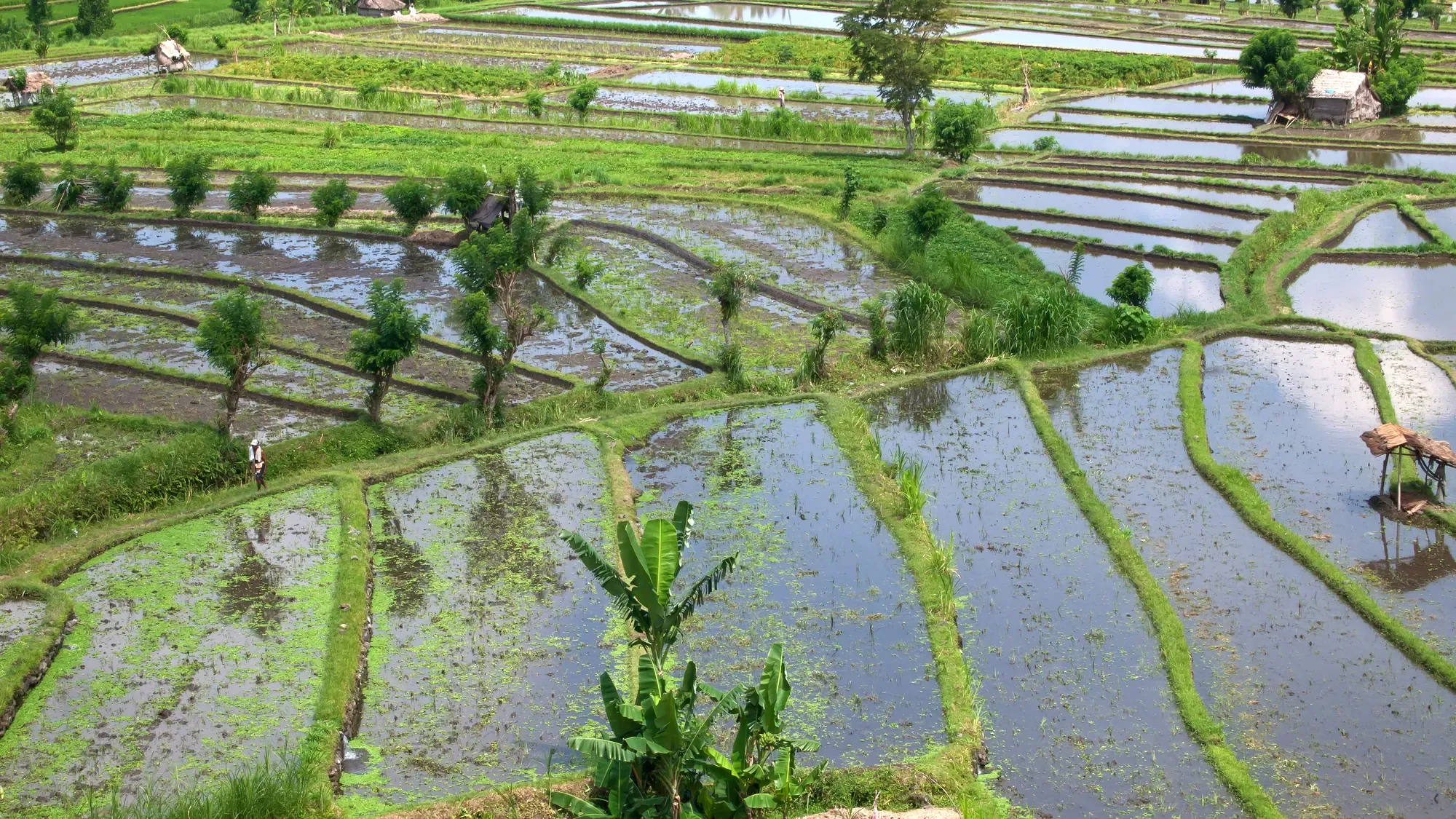
Tri Hita Karana means the three sources of well-being: harmony with the gods, among humans and with nature. It is the foundation of Balinese life. It can be read in the terraced rice fields irrigated by the subak, cooperatives that share the water from the temples. UNESCO has inscribed this cultural landscape on the World Heritage List.
“The three causes of well-being: the gods, humans, nature.”
The subak is not just a network of channels. It is an institution: the farmers of the same basin meet, decide on the crop calendar and the sharing of water, and make offerings at the water temples along the way, from the spring to the fields.
It is this link between religion, community and farming that earned the UNESCO listing. When you walk through a rice field, you cross a social system as much as a landscape.
Pura, merajan: how Balinese temples are organized
The word pura means a public temple. Each village has several, linked to origins, to the village council and to death. Above them come the island’s great temples, such as Besakih. Each family also has its own household shrine, the merajan or sanggah, in the courtyard of the house.
- The island’s great temples: Besakih, on the slopes of Agung, is considered the mother temple.
- Village temples: each has its function and its festivals, the odalan, the temple’s anniversary.
- Water temples: linked to springs, lakes and the subak, such as Tirta Empul or Ulun Danu Bratan.
- The merajan or sanggah: the family shrine, within the walls of the house. It is not open to visitors.
A Balinese temple is made of successive courtyards, each more sacred than the last. You often enter through a split gate, the candi bentar. The inner courtyard, the most sacred, is sometimes closed to visitors.
The 6 temples in Bali worth the trip
Six temples justify the trip: Besakih for its rank as mother temple, Tirta Empul for its purification pools, Ulun Danu Bratan for its lake, Uluwatu for its cliff, Tanah Lot for its rock in the sea and Lempuyang for its gates facing Agung. Each is best visited early in the morning.
Besakih
On the slopes of the Agung volcano, the most important temple on the island. A complex of tiered shrines, to be visited with a site guide.
Tirta Empul
Near Ubud, the pools where worshippers purify themselves under spring spouts. Visitors can take part while respecting the ritual.
Ulun Danu Bratan
On the shore of Lake Bratan, in the central highlands. A water temple linked to the subak, often in the morning mist.
Uluwatu
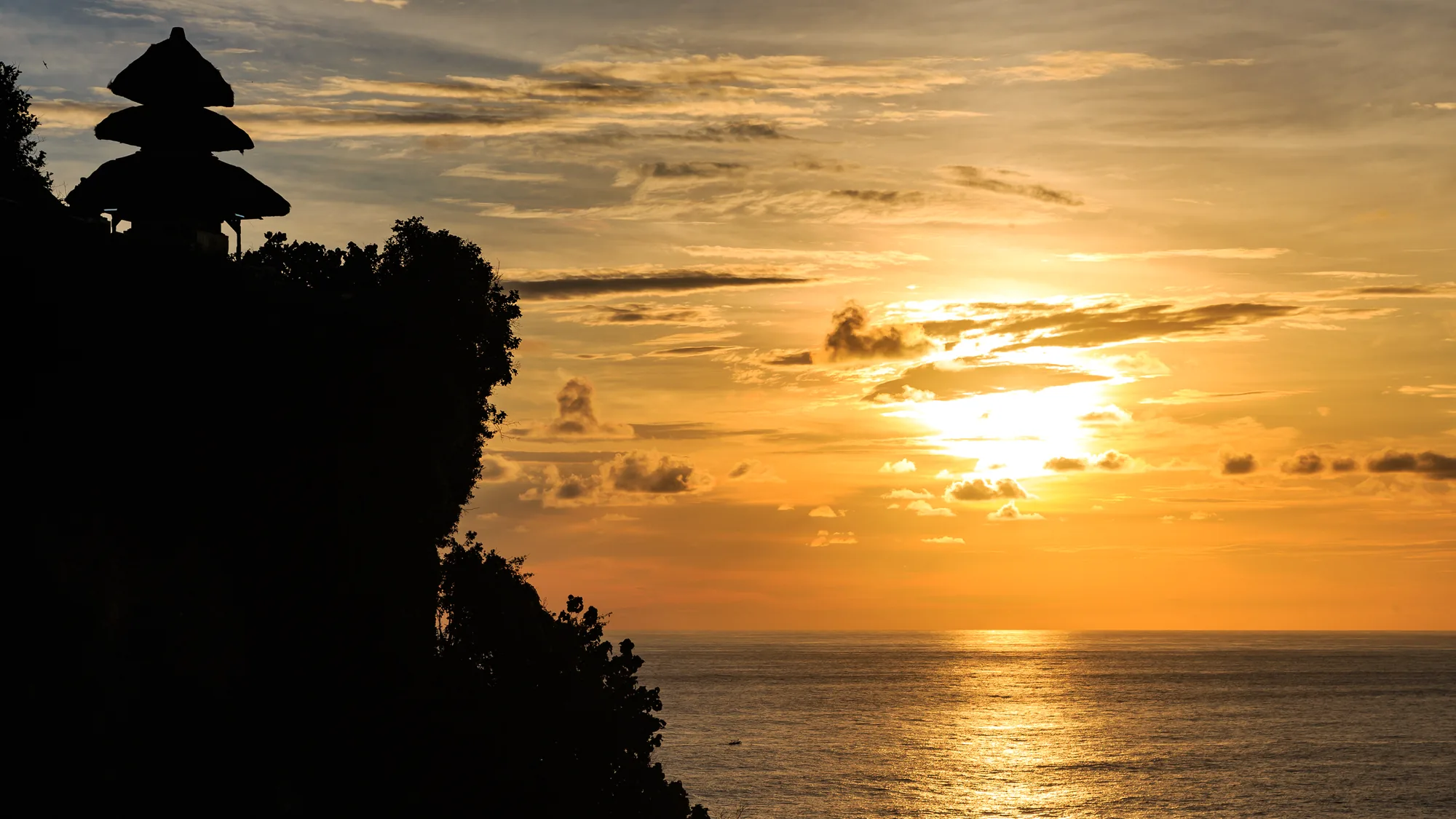
On the edge of the Bukit cliff, above the ocean. The kecak dance is performed there late in the day. Watch out for the macaques.
Tanah Lot
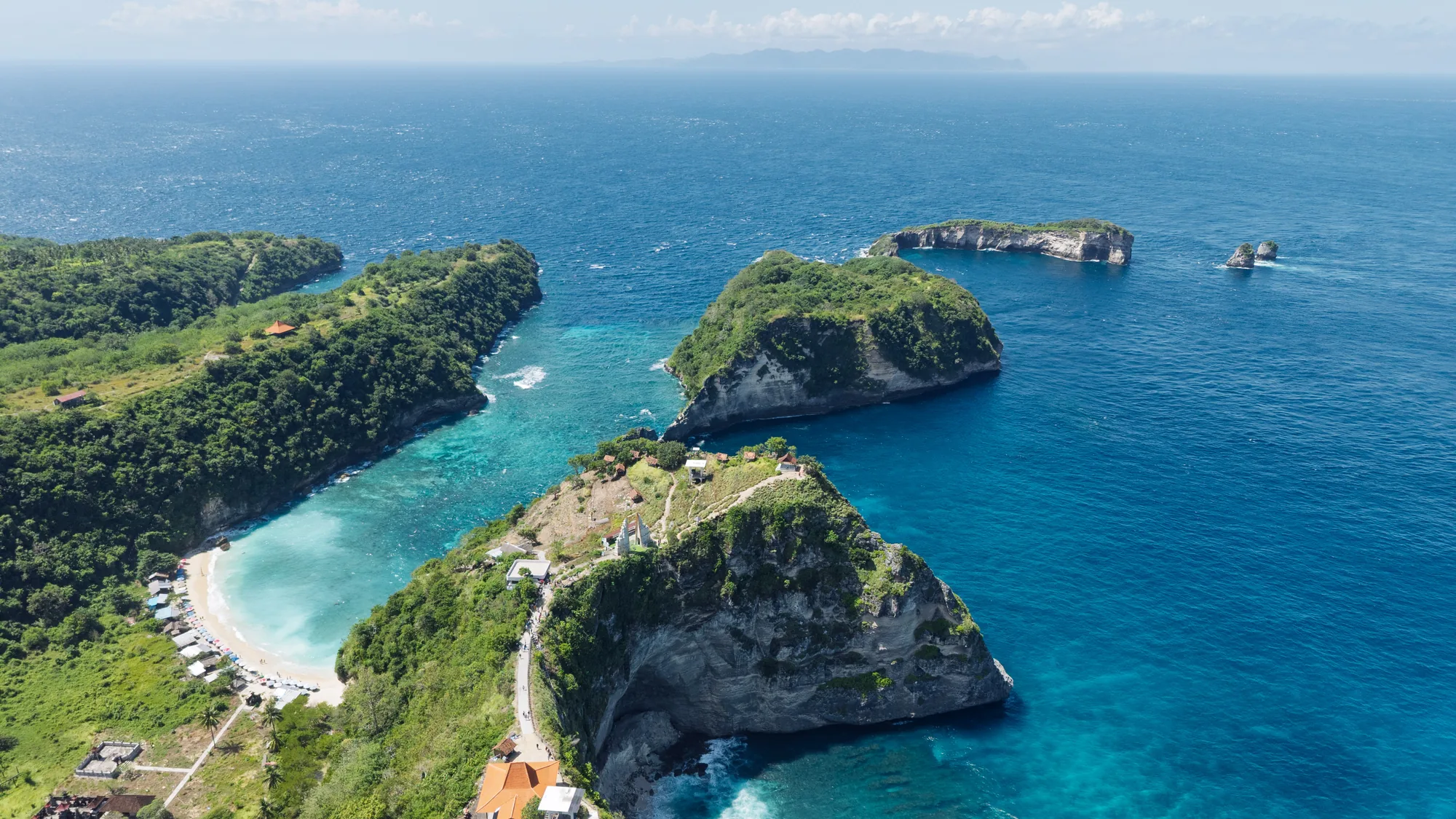
On a rock battered by the waves. You admire it from the shore: the sanctuary is not open to visitors.
Lempuyang
In the east, its gates frame Agung. Waiting for the photo is common there; the climb to the upper shrines is calmer.
Nyepi, Galungan, Kuningan and cremations
Nyepi, the day of silence, opens the Balinese year: for 24 h, the island stops. Galungan celebrates the return of the ancestors and Kuningan closes this period. Cremations, ngaben, are celebrations as much as mourning. Visitors can attend from a distance, properly dressed, without bothering the family.
Nyepi falls the day after the new moon of the ninth Balinese month: in 2027, in early March, official date to be confirmed. Airport suspended, no travel, lights dimmed, fasting for many. The day before, villages parade the ogoh-ogoh before burning them.
During Galungan, penjor, long decorated bamboo poles, arch over the streets. Families bring offerings to the temple and welcome their relatives. Kuningan, ten days later, marks the departure of the ancestors. How it unfolds and what closes on those days is in Galungan and Kuningan.
Cremations are public ceremonies, often spectacular, but organized by a family. Stay to one side, in a sarong, and do not join the procession. Mass cremations, odalan and processions are detailed in Bali ceremonies and cremations.
The dances performed at temple festivals have their secular counterparts on the evening stages: see Balinese music and dance. The statues, masks and fabrics of the ceremonies come from the workshops presented in Bali crafts and markets. What cooking owes to offerings, and why pork is eaten in Bali, is explained in Balinese food.
Visiting a temple in Bali: entry, donations and guides
Most temples open to visitors ask for a contribution or an entry ticket, which often includes the loan of a sarong. At the major sites, guides offer their services at the entrance: useful for understanding, they must state their rate before the visit. A donation in the temple box is always welcome.
- Arrive early: the great temples are calm in the morning, and the light is softer.
- Read the signs at the entrance: they recall the rules of the place and the closed areas.
- An official site guide can be recognized by their badge; agree on the price and duration before starting.
- During an odalan, the temple festival, visits may be restricted: the festival comes first.
Visiting a village temple, away from the well-known sites, is often more memorable. Ask your accommodation whether a ceremony is taking place: they will tell you what to wear and when you can attend without getting in the way.
Taking photos in Bali without disrespect
Photographing a temple is generally allowed; photographing a ceremony requires the participants’ permission. No flash, no drone above a rite, no posing on an altar or a sacred wall. If someone refuses with a gesture, put the camera away without insisting.
- Ask before photographing a person in prayer or a priest.
- Stay at the level of the worshippers, never above them, even for a better angle.
- Do not climb on walls, statues or altars for a photo.
- Check the rules posted at the entrance: some temples forbid drones or certain areas.
Frequently asked questions
What to wear to visit a temple in Bali?
A sarong tied at the waist with a sash, and shoulders covered. Many temples lend or rent the sarong at the entrance.
Can you enter all the temples in Bali?
No. The most sacred sanctuaries, such as Tanah Lot’s, are reserved for worshippers, and some inner courtyards remain closed. Family temples are not open to visitors.
What are the small offerings placed on the ground?
They are canang sari, daily offerings of flowers and rice in a leaf basket. You never step on them.
Can you attend a Balinese ceremony?
Yes, staying at a distance, properly dressed and without bothering the participants. Ask permission before taking photos.
What does Tri Hita Karana mean?
The three sources of well-being: harmony with the gods, among humans and with nature. It is the foundation of Balinese life.
Sources
Figures and rules checked on October 17, 2026 against the sources below. Entry rules and fees change: always check them on the official websites before you leave.
III
Temple dress and rules of conduct in Bali
At a temple, wear a sarong tied with a sash and cover your shoulders. According to local custom, women who are menstruating do not enter. Do not stand in front of a priest in prayer, do not step on offerings, do not touch people’s heads and do not point your feet towards an altar.
The head is considered the most sacred part of the body, the feet the lowest. These two markers explain most of the rules: you do not touch anyone’s head, even a child’s, and you do not put your feet on anything used for worship.