Culture
Balinese food: the dishes to try and how to eat in Bali
Bali eats pork in a Muslim-majority country, cooks for its gods before cooking for itself, and seasons almost everything with the same spice paste. Here are the dishes to recognise, where to try them and how to order without mistakes.
- Updated on
- 12 min read
- By Kylian Dev
Contents
Key points
- The must-tries: babi guling, betutu, lawar, sate lilit and nasi campur for savoury; bubuh injin, pisang rai and jaje for sweet.
- Hindu-majority Bali eats pork: babi guling is a ceremonial dish that has become everyday warung food.
- Almost everything starts from base genep, the Balinese spice paste, and the heat comes mostly from the sambal served on the side.
- The warung, a small family-run eatery, is where you eat Balinese food day to day, for a few tens of thousands of rupiah.
- Vegetarian, pork-free or allergic: a few phrases in Indonesian and a handful of words to spot on the menu are enough.
Balinese food is not simply spicier Indonesian food. It rests on three things found together nowhere else in the country: pork, forbidden to the archipelago’s Muslim majority but central to the island’s Hindu festivals; offerings, which make food a daily religious act; and a spice paste, base genep, that flavours meat, vegetables and sauces.
This guide first presents the dishes to try, with photos and their local names so you can recognise them on a warung board. It then explains what food owes to ritual, the basic ingredients, where and how to eat, dietary needs and allergies, then drinks. For the religious background, see Balinese temples and culture; for the festivals when the most cooking happens, Galungan and Kuningan.
Balinese dishes to try
The best-known dish is babi guling, suckling pig stuffed with spices and spit-roasted. Then come betutu, very spicy chicken or duck, lawar, a mix of vegetables, coconut and minced meat, sate lilit, minced meat wrapped around a stick, and nasi campur, a plate of rice with small portions of several dishes.
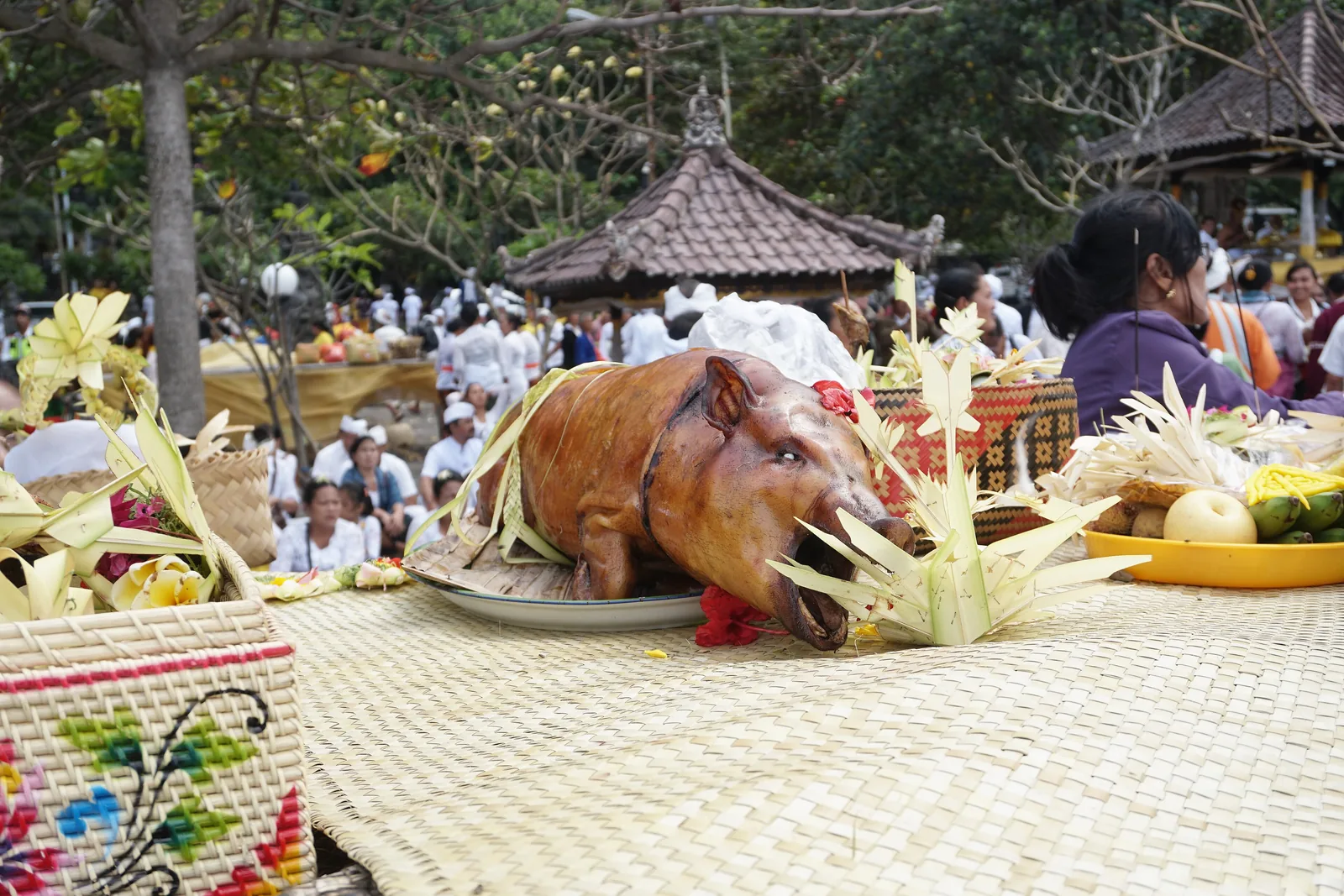
babi guling
Babi guling
Suckling pig stuffed with chilli, turmeric, garlic, ginger and leaves, spit-roasted while being turned until the skin is brown and crisp. Served with rice and lawar. First a ceremonial dish, it is now sold in warungs.
- Chilli
- Spicy
- Where to try it
- Babi guling warungs, many of them around Gianyar, known for the dish, and Ubud.
Photo: Crisco 1492, CC BY-SA 3.0, Wikimedia Commons (new tab). Photo credits
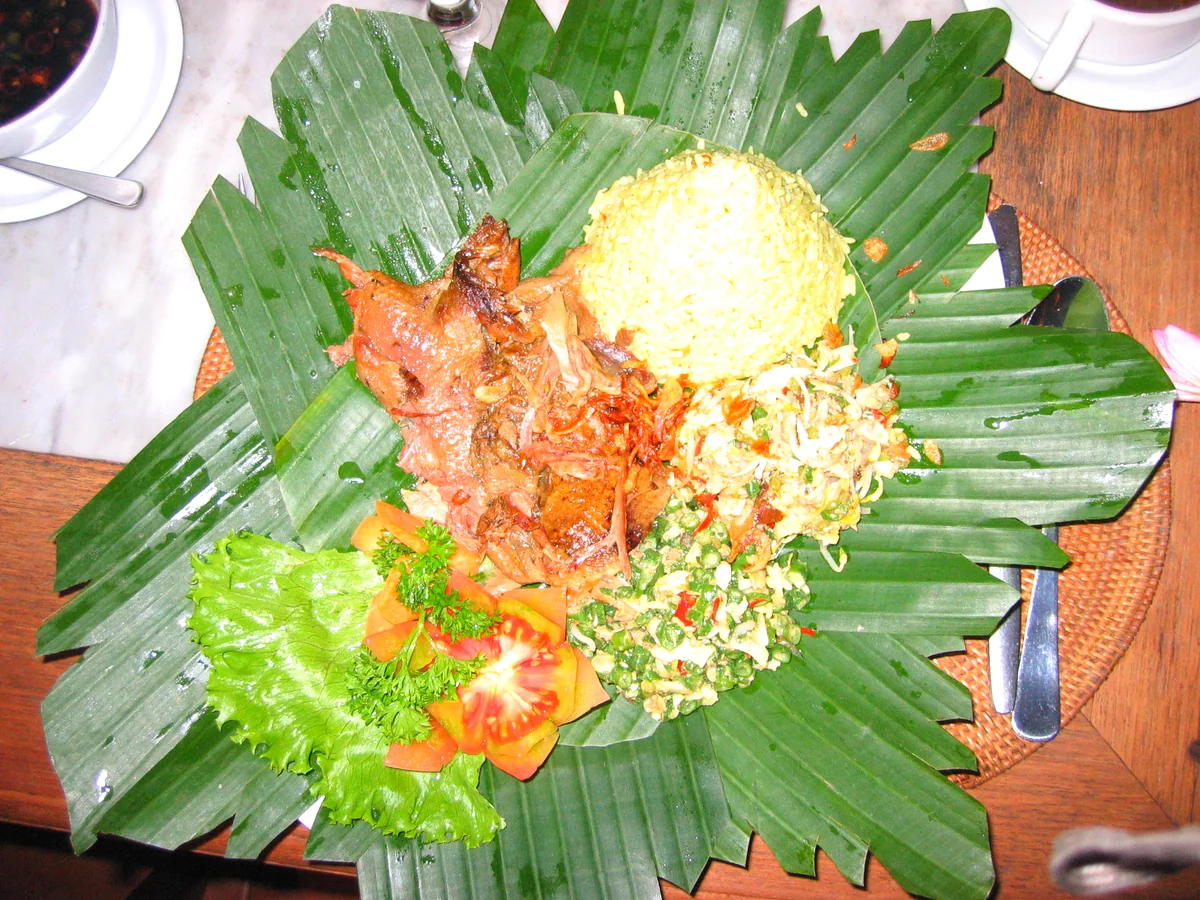
ayam betutu, bebek betutu
Betutu
Chicken (ayam) or duck (bebek) coated in a paste of shallot, garlic, turmeric, ginger, galangal, candlenut, chilli, shrimp paste and peanuts, then steamed or roasted. In Gianyar it is wrapped in banana leaves.
- Chilli
- Very spicy
- Where to try it
- Gilimanuk, in the west, known for a very spicy betutu, and Balinese restaurants in the tourist areas.
Photo: casey yancey from brooklyn, CC BY 2.0, Wikimedia Commons (new tab). Photo credits
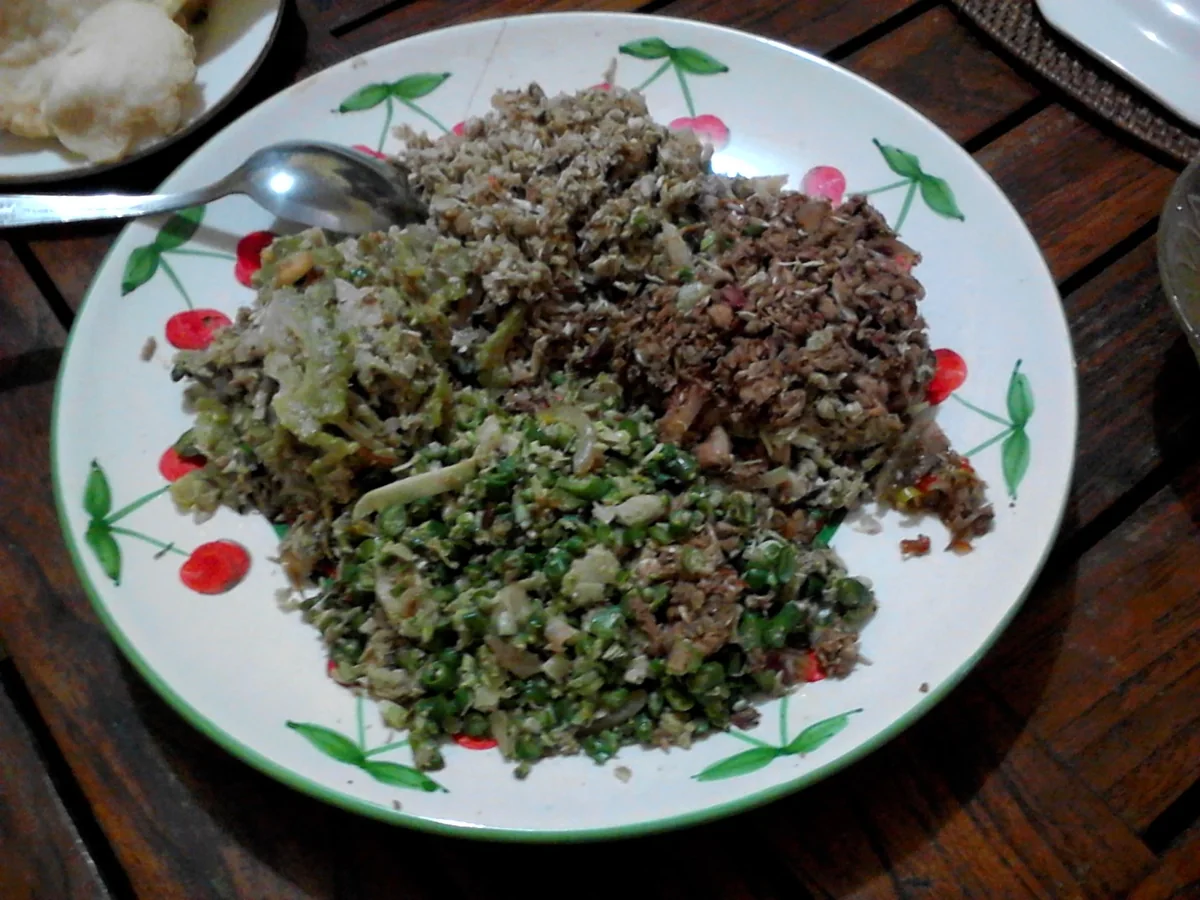
lawar merah, lawar putih
Lawar
A mix of vegetables (green beans, young jackfruit), grated coconut, minced meat and spices. Red lawar contains pork or chicken blood, white lawar does not. It spoils quickly, so it is eaten the same day.
- Chilli
- Spicy
- Where to try it
- Next to babi guling, in Balinese warungs; there are vegetarian versions made with jackfruit.
Photo: ちちゃ, CC BY 2.1 jp, Wikimedia Commons (new tab). Photo credits
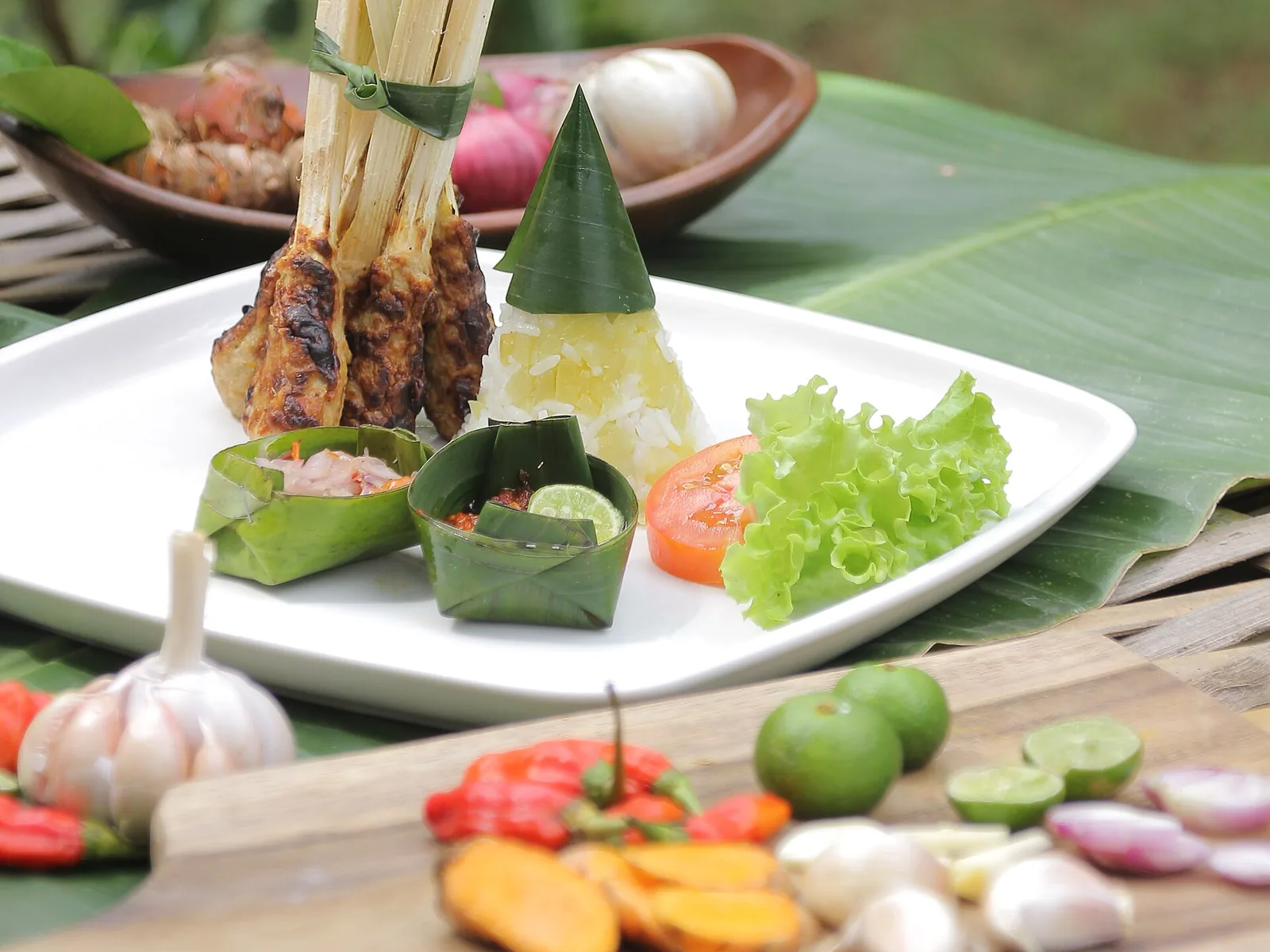
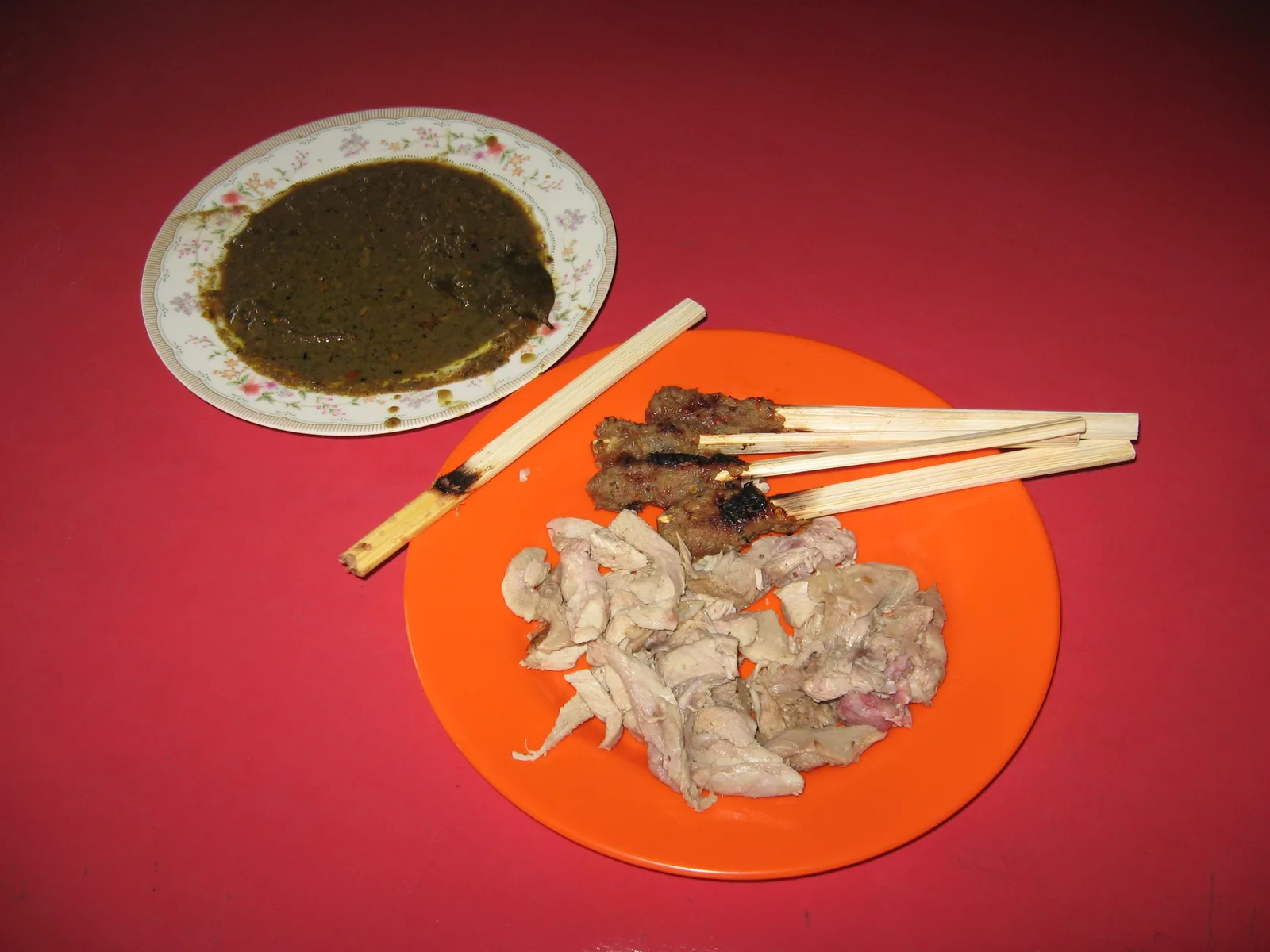
sate lilit
Sate lilit
Minced meat (pork, fish, chicken) mixed with grated coconut, coconut milk and spices, wrapped around a flat bamboo or lemongrass stick, then grilled over charcoal. “Lilit” means to wrap.
- Chilli
- Mild
- Where to try it
- In nasi campur and at sate stalls; made with fish in fishing villages such as Kusamba, in the east.
Photo: Kresnanta, CC BY-SA 4.0, Wikimedia Commons (new tab). Photo credits
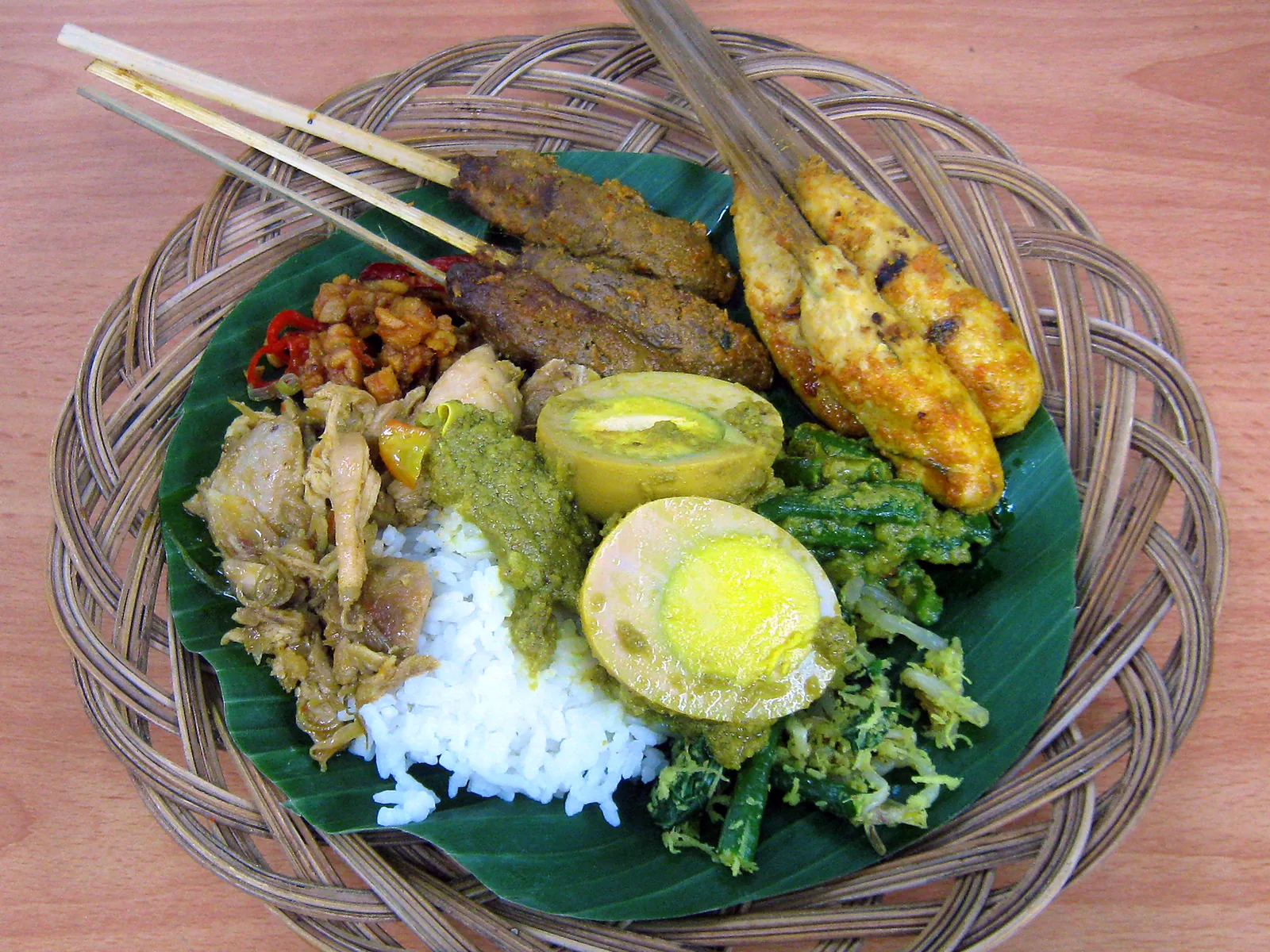
nasi campur, nasi Bali
Nasi campur
A mound of white rice with small portions: vegetables, tofu, tempeh, fish or meat, sate, egg, sambal. In Bali the dishes are seasoned with base genep. What goes on the plate changes from one warung to the next.
- Chilli
- Spicy
- Where to try it
- Everywhere, from the neighbourhood warung to the airport canteen. Taste the sambal before mixing it in.
Photo: Gunawan Kartapranata, CC BY-SA 3.0, Wikimedia Commons (new tab). Photo credits
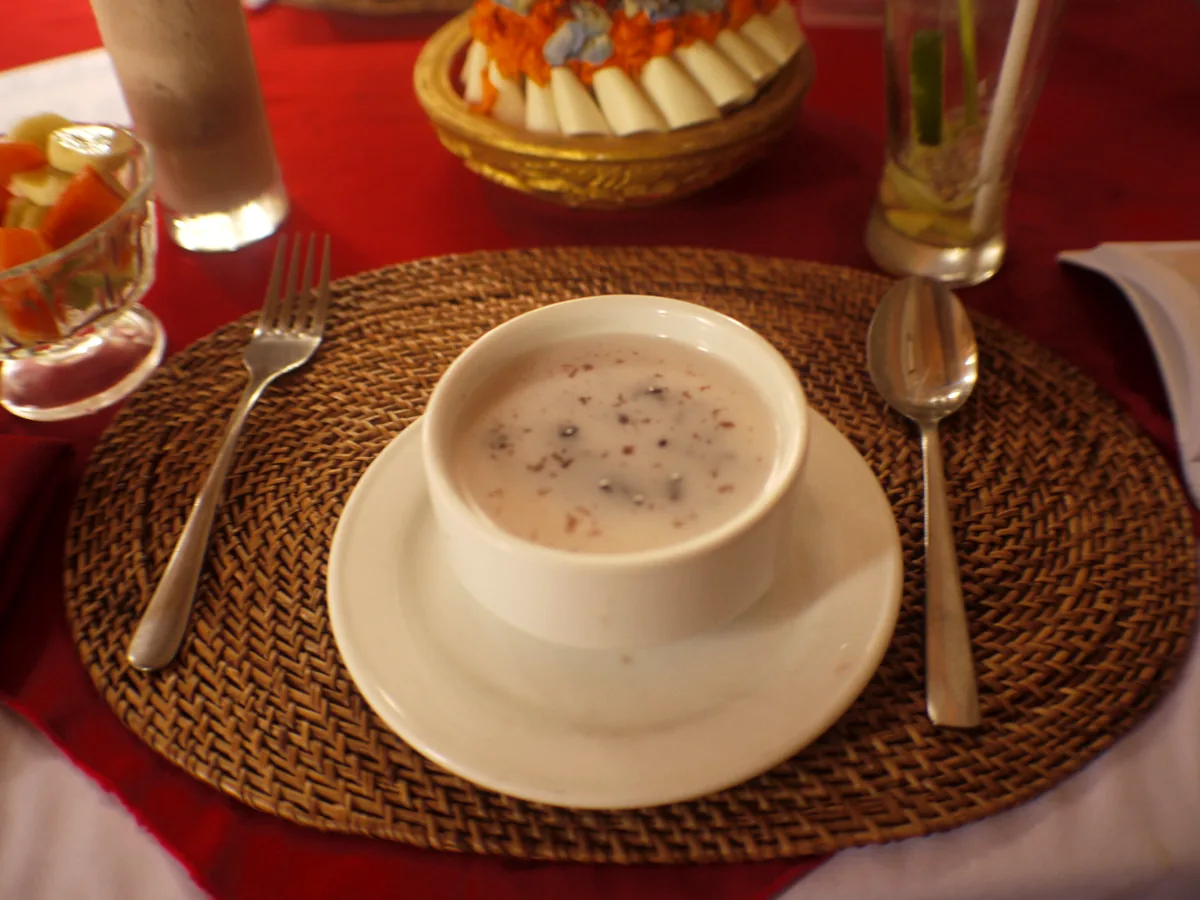
bubuh injin, bubur injin
Bubuh injin
Black glutinous rice cooked until creamy, served with coconut milk and palm sugar, sometimes grated coconut. The Balinese version of Indonesian bubur ketan hitam.
- Chilli
- Not spicy
- Where to try it
- At breakfast in many guesthouses, and as a dessert in warungs.
Photo: Robb1e, CC BY-SA 2.0, Wikimedia Commons (new tab). Photo credits
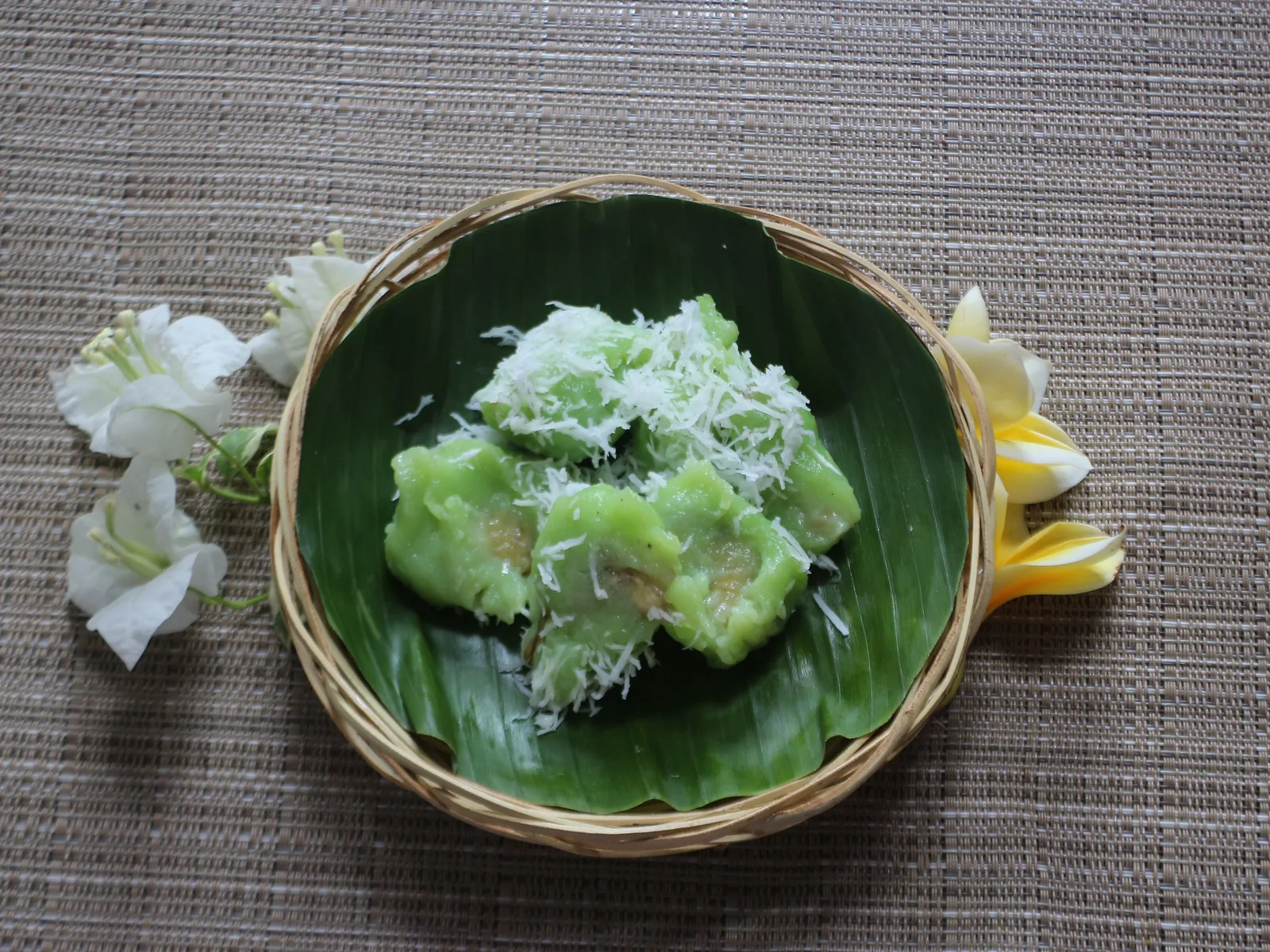
pisang rai
Pisang rai
Banana coated in a rice-flour batter, cooked, then rolled in grated coconut and often drizzled with palm sugar. The batter is sometimes tinted green.
- Chilli
- Not spicy
- Where to try it
- On the cake stalls of morning markets, with a coffee.
Photo: Joseagush, CC BY-SA 4.0, Wikimedia Commons (new tab). Photo credits
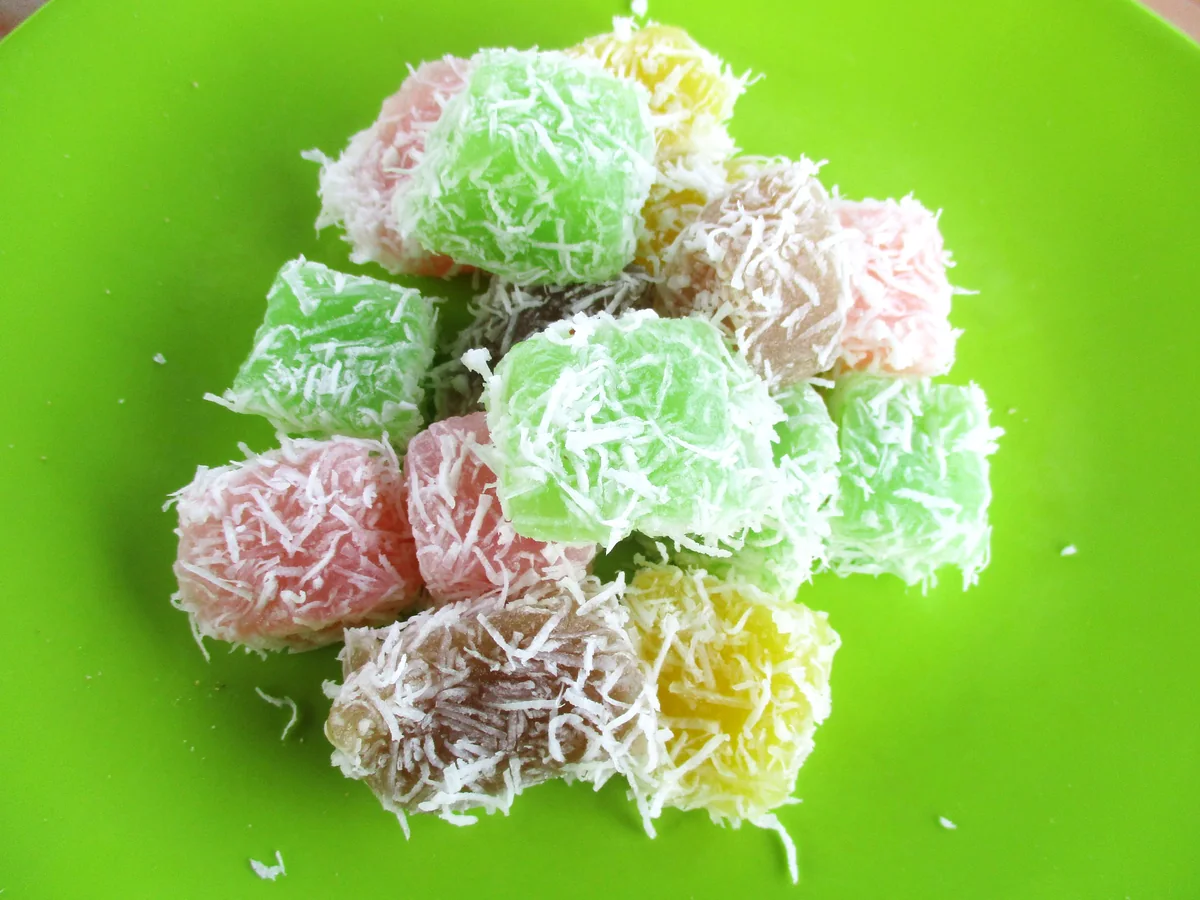
jaje Bali, jaja
Jaje, Balinese cakes
Small cakes of rice flour or glutinous rice, coconut and palm sugar, often steamed in a banana leaf: laklak, a little coconut pancake; bantal; jaje iwel; sumping. Many are part of offerings.
- Chilli
- Not spicy
- Where to try it
- Morning markets and jaje stalls; they are sold by the piece.
Photo: Danangtrihartanto, CC BY-SA 4.0, Wikimedia Commons (new tab). Photo credits
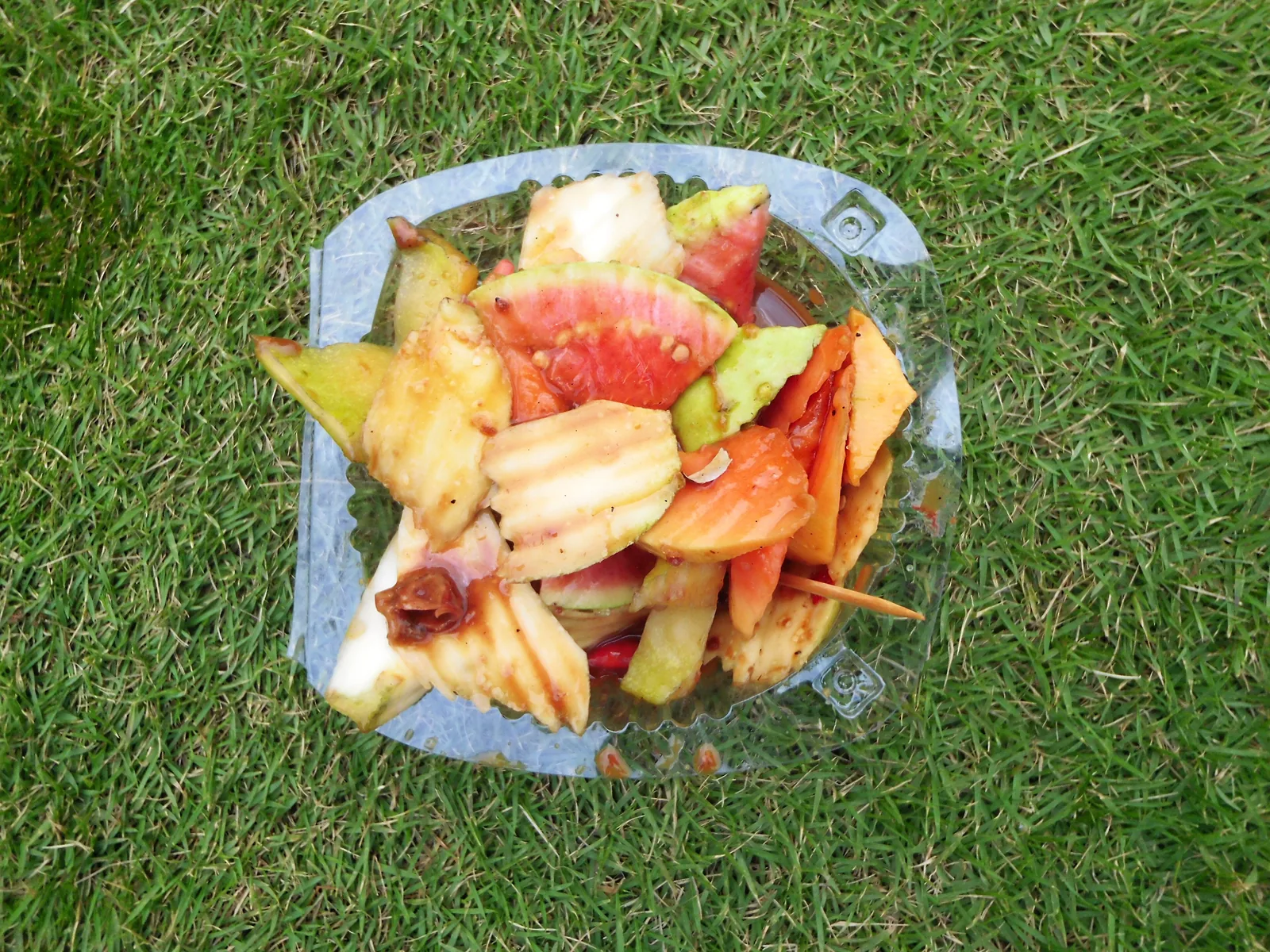
rujak, rujak kuah pindang
Rujak
Pieces of unripe fruit (mango, papaya, guava, kedondong) with a palm sugar and chilli sauce. Balinese versions: rujak kuah pindang, in a spicy fish broth; rujak bulung is made with seaweed.
- Chilli
- Spicy
- Where to try it
- From street vendors and around busy sights such as Tanah Lot.
Photo: Gunawan Kartapranata, CC BY-SA 4.0, Wikimedia Commons (new tab). Photo credits
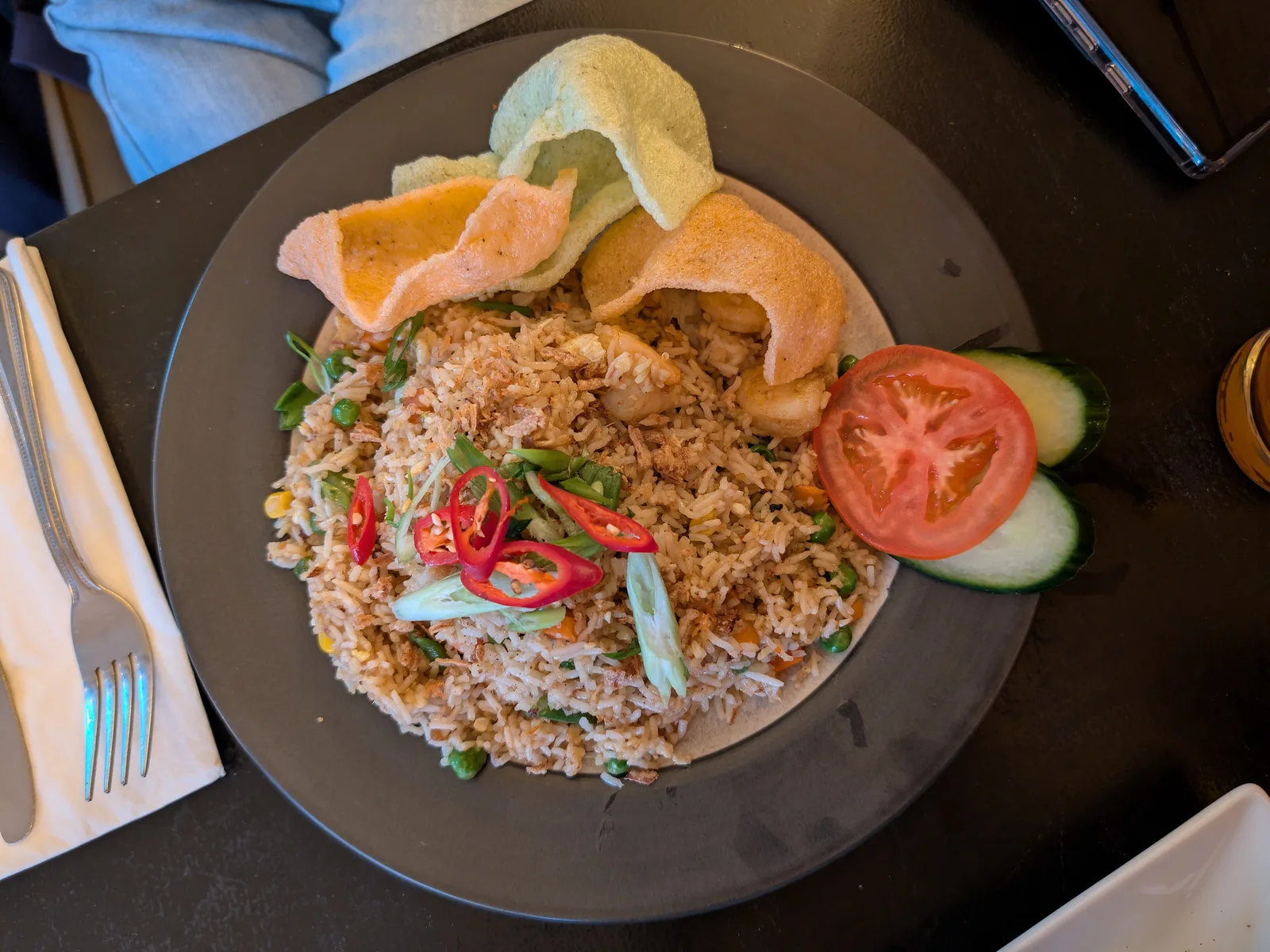
nasi goreng, mie goreng
Nasi goreng and mie goreng
Rice (nasi) or noodles (mie) stir-fried with sweet soy sauce, kecap manis, with egg, vegetables and meat or prawns. Not a Balinese speciality, but the easiest dish to find, at any hour.
- Chilli
- Mild
- Where to try it
- Everywhere. In a Balinese warung the meat may be pork: ask if it matters.
Photo: Andy Li, CC0, Wikimedia Commons (new tab). Photo credits
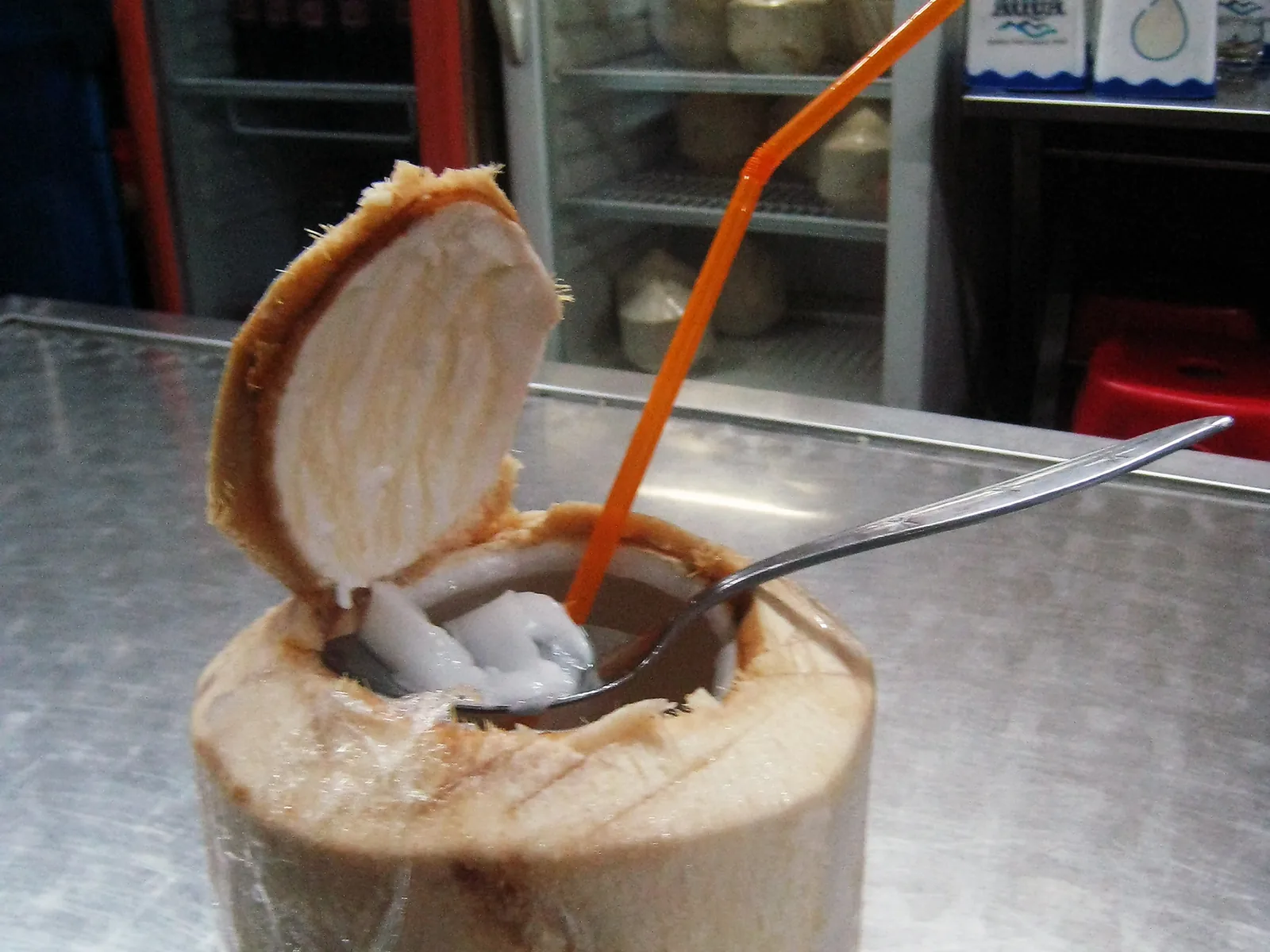
es kelapa muda
Es kelapa muda
Young coconut water served chilled with its soft flesh, sometimes sweetened with syrup. Fresh fruit juices, jus, are ordered at the same stall.
- Chilli
- Not spicy
- Where to try it
- Beach stalls and warungs, often straight from the coconut.
Photo: Gunawan Kartapranata, CC BY-SA 3.0, Wikimedia Commons (new tab). Photo credits
Chilli levels are a guide only: they depend on the cook and above all on the sambal added. Say “tidak pedas” (not spicy) when ordering.
Pork, offerings and festival food
About 87% of Balinese are Hindu, in a country where Hindus are just under 2%. The Muslim ban on pork therefore does not apply: pork is the festival meat, while beef is rarely eaten. And before eating, a share of the meal is offered to the gods.
of Bali’s inhabitants identify as Hindu
86 to 87%
Source: Wikipedia, Balinese Hinduism
of Indonesia as a whole is Hindu
about 1.7%
Source: Wikipedia, Balinese Hinduism
Babi guling was first prepared for religious and customary ceremonies, and it is still the centrepiece of the big festivals. The eve of Galungan, called Penampahan, is the day pigs and chickens are slaughtered for the feast: in the villages, families then prepare lawar and sate together. The meaning of the festival is covered in Galungan and Kuningan.
Every day, after cooking and before eating, families set out banten saiban, or jotan: a pinch of rice and the day’s dishes on a square of leaf, for the gods and the lower forces. The principle, yadnya sesa, holds that the offering comes before oneself. For temple festivals, offerings become towers of rice, cakes, fruit and meat carried in procession, and jaje have their full place in them.
The basics: rice, base genep, coconut and sambal
Rice is the base of every meal, grown on terraces irrigated by the subak system, a World Heritage site. The Balinese taste comes from base genep, a pounded spice paste. Coconut, grated, as milk or as oil, palm sugar and sambal complete everyday cooking.
| Ingredient | What it is | Where you find it |
|---|---|---|
| Rice (nasi) | Steamed white rice; white or black glutinous rice for desserts | Every meal, cakes, bubuh injin |
| Base genep | Paste of garlic, shallot, chilli, ginger, turmeric, nutmeg, cumin, palm sugar, shrimp paste | Meat, vegetables, betutu, lawar, sate lilit |
| Coconut | Grated, as milk or as oil | Lawar, sate lilit, jaje, desserts |
| Palm sugar | Brown sugar in blocks, melted into syrup | Desserts, rujak, base genep |
| Sambal matah | Raw sauce: garlic, shallot, chilli, lime, lemongrass, coconut oil | With fish, chicken, nasi campur |
In a warung, the day’s food is ready from the morning and waits in the display case: you build your plate, served at room temperature. Popular dishes are often home cooking: jukut urab, vegetables mixed with grated coconut; tipat cantok, rice cakes and vegetables in peanut sauce; nasi jinggo, a small portion of rice and sides wrapped in a banana leaf.
The rice fields that feed the island can be visited: the finest terraces are described in Sidemen and Munduk.
Where and how to eat: warungs, markets, ordering
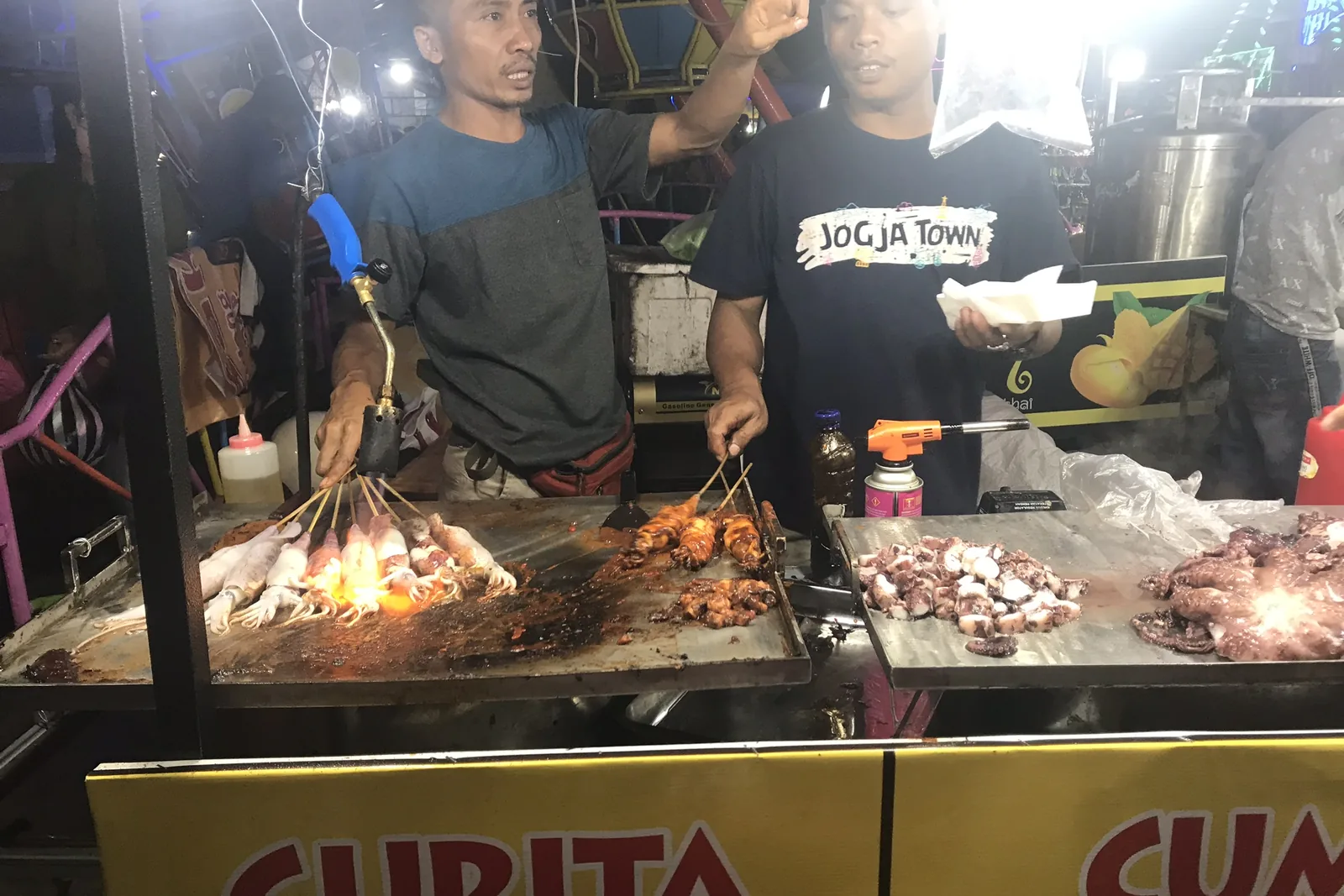
The warung, a small family-run eatery, is the simplest and cheapest way to eat Balinese food: a plate costs a few tens of thousands of rupiah. In the evening, night markets bring together stalls of grilled food, soups and desserts. You eat with a spoon, and the fork is for pushing.
| Place | What you eat there | Good to know |
|---|---|---|
| Warung | Nasi campur, dishes of the day on display, nasi goreng | Point to the dishes you want, pay at the end or at the counter |
| Babi guling warung | Babi guling, lawar, pork soup | One speciality, served on a plate with rice |
| Night market (pasar malam) | Sate, soups, grilled food, desserts, juices | Local atmosphere, food cooked in front of you |
| Morning market | Jaje, pisang rai, fruit | Early, alongside shopping for offerings |
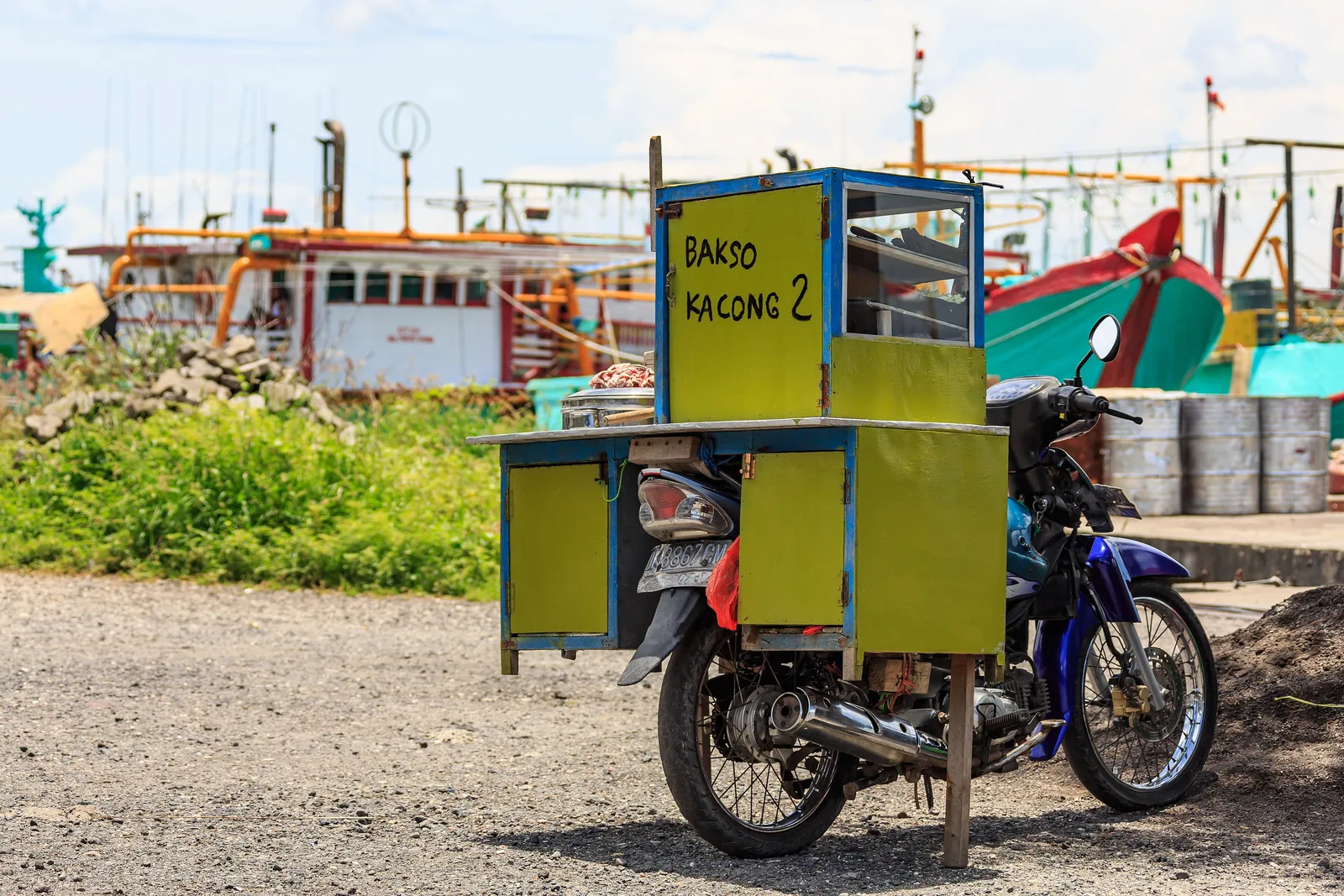
| Street vendors | Bakso (meatball soup), rujak, sate | Carts and motorbikes fitted with a small kitchen |
| Restaurants and food courts | Staged Balinese cuisine, international dishes | Displayed prices, more expensive than a warung |
- Look at what others are eating and choose a busy warung: turnover keeps the food fresh.
- At the counter, point to the dishes on display; the price depends on how many portions you pick.
- Say how much chilli you want first: “tidak pedas”, not spicy.
- Ask the price first if nothing is displayed: “Berapa harganya?”
- For the bill, say “Minta bon”, and pay in rupiah, in small notes.
Indonesians commonly eat with a spoon in the right hand and a fork in the left, used to push food onto the spoon; knives are rare. Sate are eaten straight from the stick, jaje with your fingers.
Vegetarian, pork-free, allergies: how to ask
Eating vegetarian is easy in Bali: tofu, tempeh, vegetables and rice are everywhere, and lawar comes in a jackfruit version. Pork-free is asked for in Indonesian, the language of service. Allergies need more care: peanuts and shrimp paste go into many sauces and spice pastes.
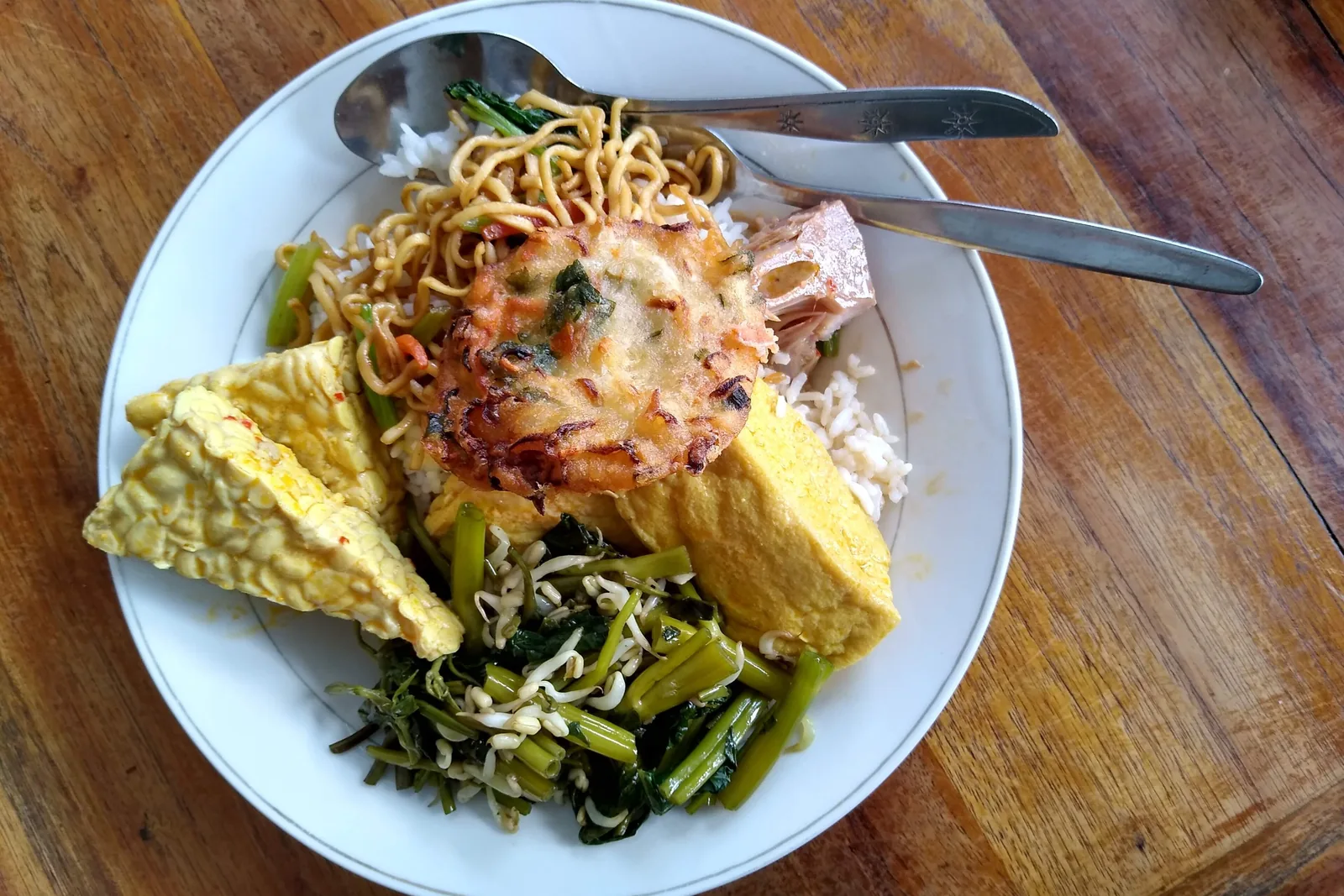
- Vegetarian: tempeh and tofu (tahu) are common proteins, lawar comes in a jackfruit version, and jukut urab is made of vegetables and coconut.
- Vegan: watch out for shrimp paste (terasi), found in base genep and many sambals, and for the egg in nasi goreng.
- Pork-free: warungs displaying “halal” are run by Muslims and do not serve pork. Elsewhere, ask.
- Peanut allergy: peanuts go into betutu paste, rujak sauce and the sauce of tipat cantok.
- Seafood allergy: shrimp paste is invisible in sauces; sate lilit and nasi campur often contain fish.
| Indonesian | What it means |
|---|---|
| Saya vegetarian. | I am vegetarian. |
| Saya tidak makan babi. | I don’t eat pork. |
| Saya alergi akan kacang tanah. | I am allergic to peanuts. |
| Saya alergi akan udang. | I am allergic to prawns. |
| Tidak pedas. | Not spicy. |
| Berapa harganya? | How much is it? |
| Minta bon. | The bill, please. |
| Terima kasih. | Thank you. |
| Word | Meaning |
|---|---|
| babi | pork |
| ayam | chicken |
| bebek | duck |
| sapi | beef |
| ikan | fish |
| udang | prawn |
| tahu, tempe | tofu, tempeh |
| sayur | vegetables |
| kacang | peanut, bean |
| goreng, bakar | fried, grilled |
| pedas | spicy |
Drinks: Kintamani coffee, kopi luwak, juices and arak
Balinese coffee grows mostly in the Kintamani highlands, whose arabica received Indonesia’s first geographical indication in 2008. Kopi luwak is best approached with caution, because of caged civets. For something cool: coconut water, fruit juice, jamu. For alcohol: beer, brem and arak, bought in a sealed bottle.
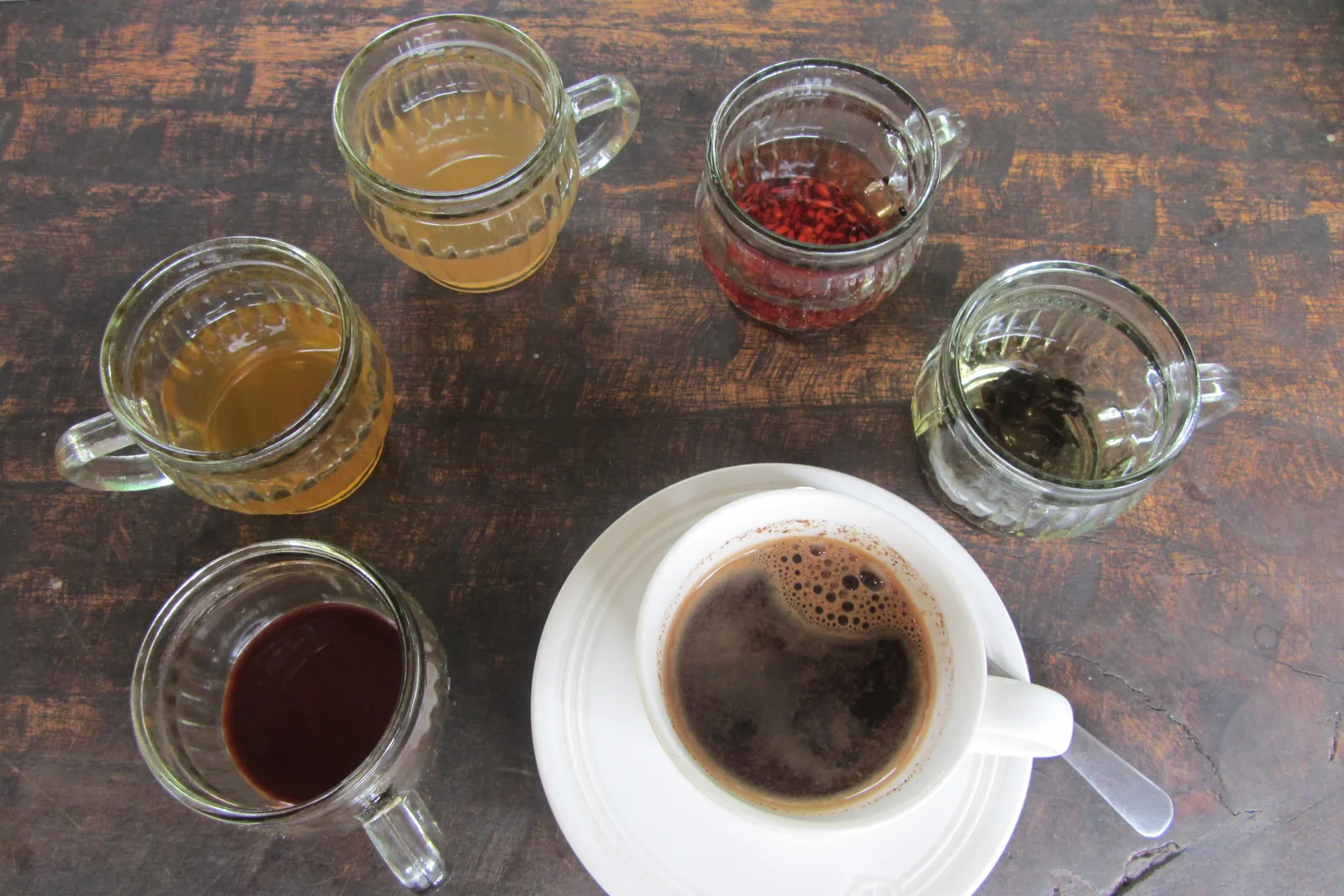
- Kopi Bali: the local black coffee, called kopi selem in Bali, is made like Indonesian kopi tubruk, hot water poured over fine grounds, unfiltered and often sweetened; let the grounds settle before drinking. Kintamani arabica grows above 900 metres, on the slopes of Mount Batur.
- Kopi luwak: beans collected from civet droppings. Investigations have found civets kept in cages, force-fed, and coffee labelled “wild” that was not. Plantations open to visitors often show them: make up your own mind.
- Jamu: a traditional drink of ginger or turmeric, with lime and honey.
- Coconut water, fresh fruit juice and daluman, an iced drink of cincau leaves, coconut milk and palm sugar.
- Brem: fermented glutinous rice wine, white or black, also used in offerings.
The Balinese table: guests, festivals and village life
Balinese food is shared with the gods first: big meals follow the festivals, Galungan, a temple’s odalan, a wedding, and festive dishes such as babi guling, lawar and sate are prepared in quantity. As a guest, wait to be served, taste a little of each dish and leave the offerings alone.
For temple festivals, families prepare offerings of rice, cakes, fruit and meat, carried in procession and then brought back home. If you are invited to a ceremony, temple dress, sarong and sash, is expected even for the meal.
- Wait to be invited to help yourself; tasting a little of each dish is enough.
- Sate is eaten straight from the stick; nasi jinggo is unwrapped and eaten from its leaf.
- Do not touch the offerings placed on the table or on the ground: they are not for the guests.
To attend a village festival in good conditions, check the festival calendar. The dance that often accompanies these evenings is explained in Balinese music and dance, and the markets where offerings and cakes are bought in Bali crafts and markets.
Frequently asked questions
What is the typical dish of Bali?
Babi guling, suckling pig stuffed with spices and spit-roasted, served with rice and lawar. After it come betutu, sate lilit and nasi campur.
Why do people eat pork in Bali?
Because Bali is about 87% Hindu, in a Muslim-majority Indonesia. The Muslim ban does not apply, and pork is the festival meat.
Is Balinese food very spicy?
It is well seasoned, mostly through the sambal served on the side. Betutu is the hottest. Say “tidak pedas” for a dish without chilli.
Can you eat vegetarian in Bali?
Yes, easily: tofu, tempeh, vegetables and rice are everywhere. Vegans should watch out for shrimp paste in sauces.
How much does a meal in a warung cost?
A few tens of thousands of rupiah for a plate of nasi campur, depending on the place and the dishes chosen. The ranges are in the budget guide.
Should you try kopi luwak?
It is a personal choice. Investigations have found civets kept in cages and misleading labels; Kintamani arabica can be tasted without that problem.
Sources
Figures and rules checked on October 19, 2026 against the sources below. Entry rules and fees change: always check them on the official websites before you leave.
- Wikipedia, Balinese cuisine (new tab)
- Wikipedia, Balinese Hinduism (new tab)
- Wikipedia, Indonesian cuisine (new tab)
- Wikipedia, Babi guling (new tab)
- Wikipedia, Betutu (new tab)
- Wikipedia, Lawar (new tab)
- Wikipedia, Sate lilit (new tab)
- Wikipedia, Nasi campur (new tab)
- Wikipedia, Bubur ketan hitam (new tab)
- Wikipedia, Rujak (new tab)
- Wikipedia, Es kelapa muda (new tab)
- Wikipedia, Kopi luwak (new tab)
- Wikipedia, Kopi tubruk (new tab)
- Wikipedia, Galungan (new tab)
- Budaya Bali, Pisang rai (new tab)
- RRI Denpasar, Jaje iwel (new tab)
- What’s New Indonesia, Banten saiban (new tab)
- UNESCO, Cultural Landscape of Bali Province: the Subak System (new tab)
- WIPO, Kintamani Bali Arabica Coffee (geographical indication) (new tab)
- Antara Bali, governor’s regulation on arak (2020) (new tab)
- Smartraveller, Indonesia (methanol) (new tab)
- Wikivoyage, Indonesian phrasebook (new tab)