Interests
Bali waterfalls: which to see, how to get there, where to swim
Bali has dozens of waterfalls, from the most developed, a few minutes from Ubud, to the wildest, at the end of steep trails in the northern highlands. None is visited in the same way: some can be seen in an hour, others take half a day and good shoes.
- Updated on
- 6 min read
- By Kylian Dev
Contents
Key points
- Near Ubud: Tegenungan, very busy, and Tibumana, calmer. Further north: Nungnung, Sekumpul and the Munduk loop.
- Closed shoes everywhere: steps and trails are slippery, especially after rain.
- Swim only in calm pools, where the site allows it, never under the fall after heavy rain.
- End of the rains and start of the dry season: good flow, drier access. From August to October, flow at its lowest.
This guide reviews the best-known waterfalls, from the most accessible to the most demanding, with what each requires in walking, what it allows in swimming and at what time to avoid it. Entrance fees exist at most sites, paid to the village or the operator; they vary and are not given here.
The highland waterfalls combine with walks and lakes: see Munduk for the base and hiking in Bali for the trails. Those in the center are visited from Ubud.
The main Bali waterfalls compared
Tegenungan is the most accessible from Ubud and the busiest. Tibumana, also close, is calmer. Nungnung, in the central highlands, has to be earned by a long staircase. Sekumpul, in the north, is often cited as the most beautiful on the island. The Munduk loop links several falls on foot from the village.
| Waterfall | Region | Access | Swimming | Crowds |
|---|---|---|---|---|
| Tegenungan | Near Ubud | Built steps | Depending on flow and instructions | Heavy |
| Tibumana | Near Ubud | Short forest trail | Pool, in calm water | Moderate |
| Nungnung | Central highlands | Very long staircase | Not recommended near the fall | Moderate |
| Sekumpul | North | Trail and many steps | Following the guide’s instructions | Moderate |
| Munduk loop | North | Forest trails | Banyumala pool | Light to moderate |
From Ubud, Tegenungan and Tibumana can be visited in a morning. Nungnung takes half a day with the drive. Sekumpul and Munduk are best visited by sleeping in the north: on a day trip from the south, you spend more time in the car than at the foot of the falls.
Tegenungan and Tibumana, near Ubud
Tegenungan, the closest to Ubud, is a wide fall at the bottom of a valley, reached by built steps. It draws a lot of people: come at opening time. Tibumana, a curtain of water in a forest setting, is reached by a short trail and stays more peaceful. Both can be visited in a morning.
Tegenungan
A powerful fall, built steps, cafés above the valley. Very busy in the middle of the day; swimming depends on the flow and the day’s instructions.
Tibumana
A narrower fall in dense vegetation, at the end of a short trail. Calmer than Tegenungan, with a pool for swimming in calm water.
These two waterfalls are easy to combine with a morning of rice fields or temples around Ubud. A driver for the day or a ride-hailing car from the center reaches them without difficulty; the journey from the airport, if you arrive directly, is on airport → Ubud.
Nungnung and Sekumpul: the waterfalls you have to earn
Nungnung falls at the bottom of a gorge, at the end of a very long staircase that you also have to climb back up. Sekumpul brings together several falls in an amphitheater of greenery, often cited as the most beautiful on the island: allow half a day, with many steps. Both require good shoes and reasonable fitness.
At Nungnung, the descent seems easy; the climb back, in the humid heat, much less so. Leave early, with water, and take your time. The fall is powerful: you look at it from a distance rather than getting close.
At Sekumpul, a village guide is useful to find the best viewpoints and follow the trail, which crosses rivers in places. From Munduk, it is a good alternative for a third day, instead of Jatiluwih: not both.
The Munduk waterfall loop
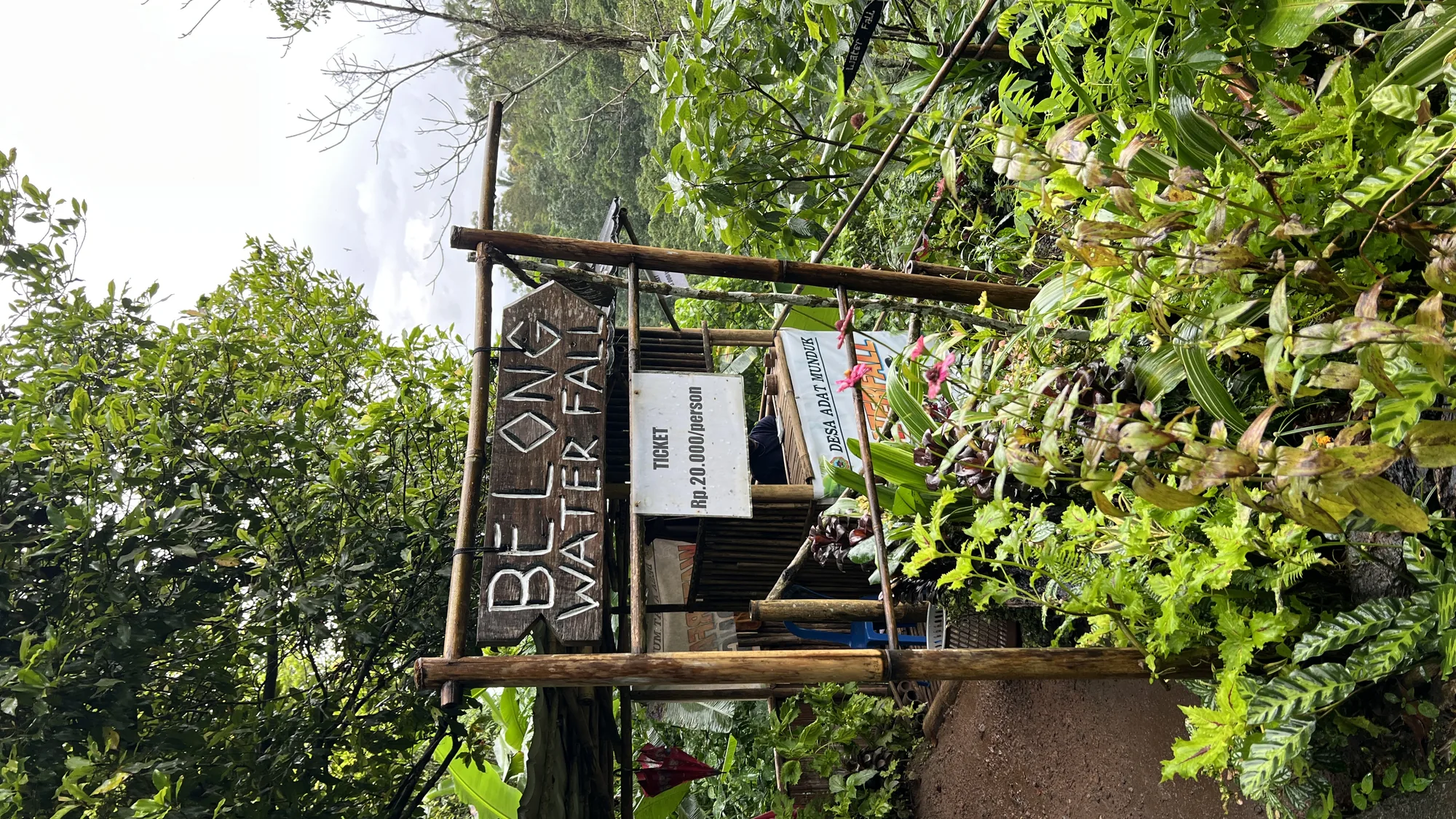
From Munduk village, a walking loop links the Munduk waterfall, Melanting, at the bottom of a valley of plantations, and Golden Valley, in dense vegetation. The twin Banyumala waterfalls, near Wanagiri, have a pool for swimming. Leave in the morning: mist often rises in the afternoon.
| Waterfall | Access | Good to know |
|---|---|---|
| Munduk waterfall | Forest trail from the village | About an hour there and back |
| Melanting | Steep descent through the plantations | The climb back is steep too |
| Golden Valley | On the same loop | Often photographed |
| Banyumala | Near Wanagiri, trail | Swimming pool; slippery path after rain |
Two to three nights in Munduk let you do the loop without rushing, then the Tamblingan and Bratan lakes. The 3-week itinerary stops in the northern highlands; the journey from the center is on Ubud → Munduk, to be done in daylight.
Swimming at the waterfalls: safety
You swim in calm pools, where the site allows it, never under a powerful fall: stones and branches can drop. After heavy rain, the level rises quickly, the water becomes muddy and some access paths close. Listen to the site guardians and give up if the water is brown or the current strong.
- Read the instructions at the entrance: swimming allowed or not, closed areas.
- Do not stand under the fall, even at low flow.
- Give up if the water is muddy or the level is rising: it is a sign of rain upstream.
- Keep your shoes on on the rocks, slippery and sometimes sharp.
- Do not go alone on isolated trails, and tell your accommodation your route.
Waterfalls are also sacred places for many Balinese: offerings are placed there, and some springs are used for purification rites. Stay discreet, do not step on offerings and dress properly out of the water. For other precautions, see health and safety in Bali.
Best season and times to avoid the crowds
The end of the rainy season and the start of the dry season, in April and May, offer good flow with drier access. In the rainy season, the waterfalls are spectacular but the steps are slippery and some access paths close. From August to October, the flow is at its lowest. Everywhere, come at opening time.
| Period | Flow | Access |
|---|---|---|
| April and May | Good flow | Trails drying out, ideal conditions |
| June and July | Falling | Dry and easy |
| August to October | Lowest of the year | Dry and easy; falls sometimes reduced to a trickle |
| November to March | Strong, sometimes muddy | Slippery, closures after heavy rain |
The Bali in May page details the start of the dry season. On the budget side, waterfalls mainly cost the drive and each site’s entrance fee: group them by region, with a driver for the day, as the budget guide explains.
Frequently asked questions
What is the most beautiful waterfall in Bali?
Sekumpul, in the north, is often cited as the most beautiful, with several falls in an amphitheater of greenery. It takes half a day and many steps.
Which waterfall to see near Ubud?
Tegenungan, the most accessible, very busy, and Tibumana, calmer, at the end of a short trail. Both can be visited in a morning.
Can you swim in Bali’s waterfalls?
In some pools, such as at Tibumana or Banyumala, in calm water and when the site allows it. Never under a powerful fall or after heavy rain.
When to visit Bali’s waterfalls?
In April and May, for good flow and drier trails. In the morning, at opening time, to avoid the crowds and the highland mist.
Are Bali’s waterfalls suitable for children?
Tegenungan and Tibumana, with children who are good walkers and wear closed shoes. Nungnung, Sekumpul and the Munduk loop are steep and slippery: avoid them with young children.
Sources
Figures and rules checked on October 17, 2026 against the sources below. Entry rules and fees change: always check them on the official websites before you leave.